
Conservation Divemaster
Take your diving to a professional level while developing hands-on experience in marine research and conservation.
Conservation Divemaster (CDM)
More than a Divemaster
The SORCE Conservation Divemaster combines the internationally recognised PADI Divemaster qualification with eight weeks of immersive marine conservation training and field experience.
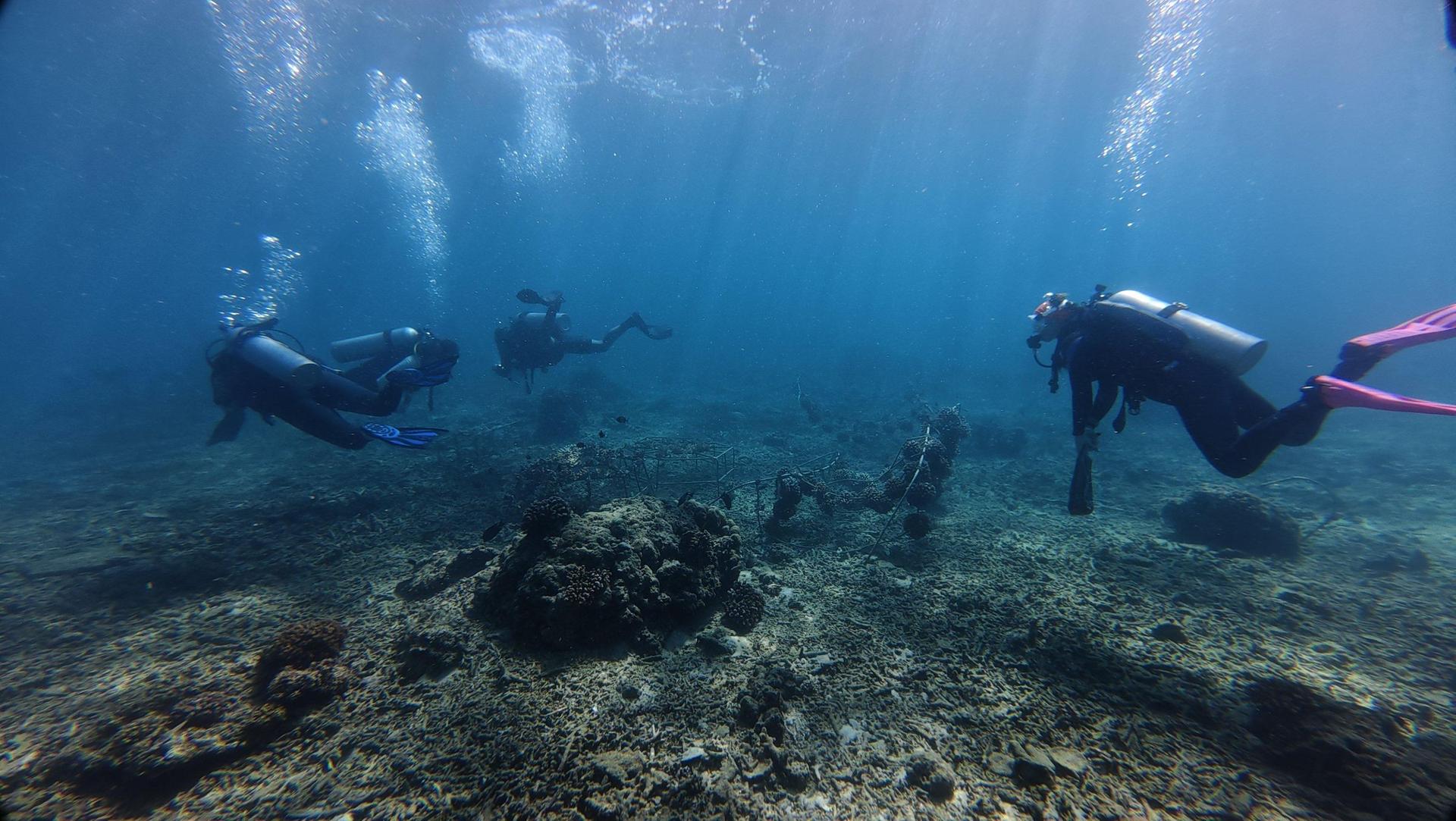
Here, Divemaster training and conservation work are one course. Alongside developing the knowledge, confidence and practical skills required of a dive professional, you'll train with our marine science team and participate directly in the research, monitoring and restoration activities taking place across the tropical marine ecosystems surrounding SORCE.
From coral restoration and reef monitoring to species identification, underwater survey techniques, mangrove restoration and artificial reef construction, you'll learn how professional diving skills can be applied to meaningful marine conservation.
Four cohorts a year. You'll progress through the expedition as a group, rather than arriving alone.

- Minimum age
- 18
- Duration
- 8 - 25 weeks
- Start dates
- Every 10 weeks from March
- Entry level
- Rescue Divers, or train up with us
- From
- £3,850
What you'll experience
Professional Diving, Applied Conservation
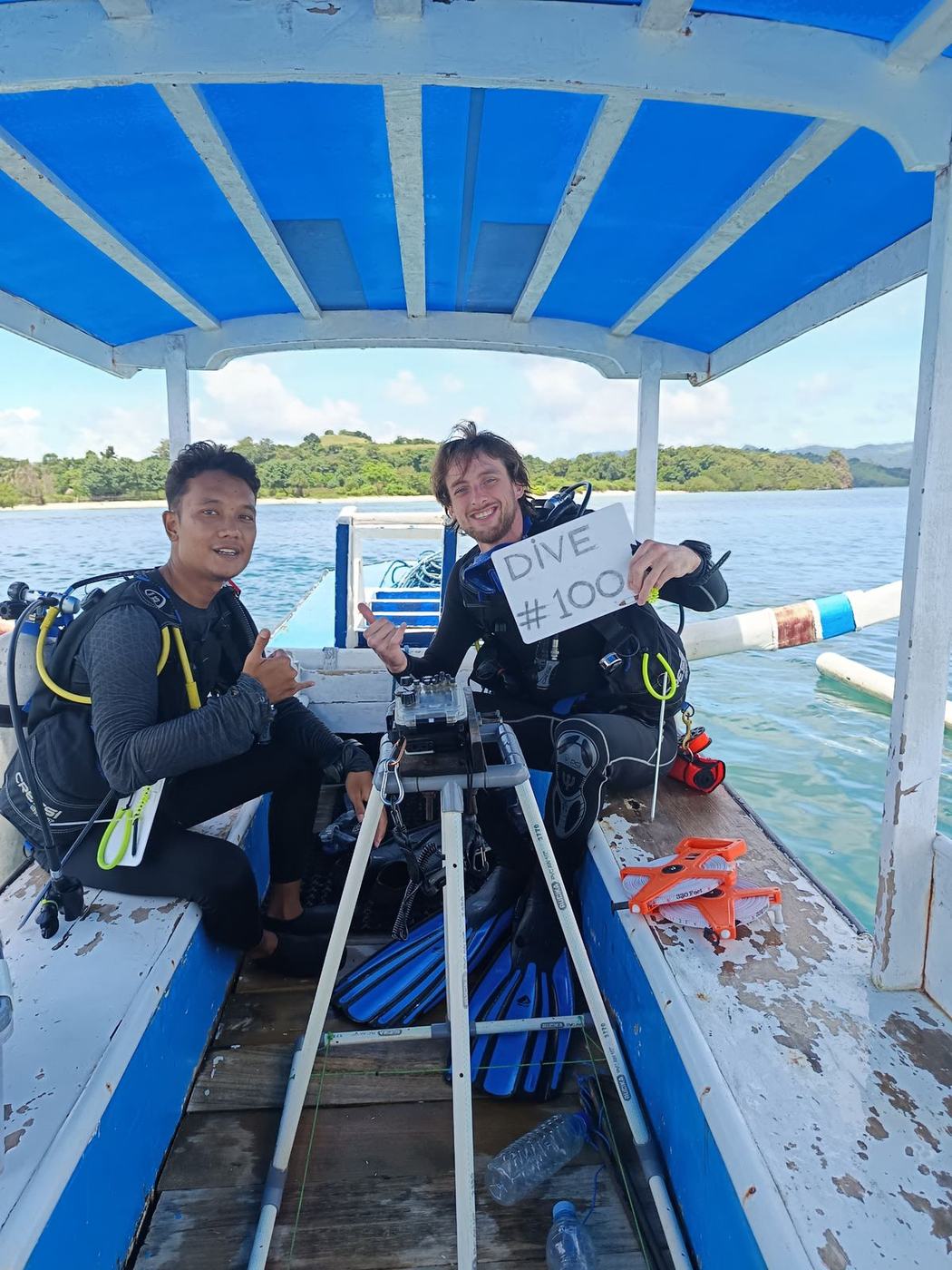
Becoming a PADI Divemaster is the first step into professional diving. At SORCE, we take that training beyond recreational dive leadership. You'll divide your time between professional dive training and practical marine conservation, learning from both our dive professionals and our marine science team.
-

Professional diving
Dive planning and logistics, supervising diving activities, assisting other divers, and the confidence and judgement expected of a dive professional.
-
Coral reefs and restoration
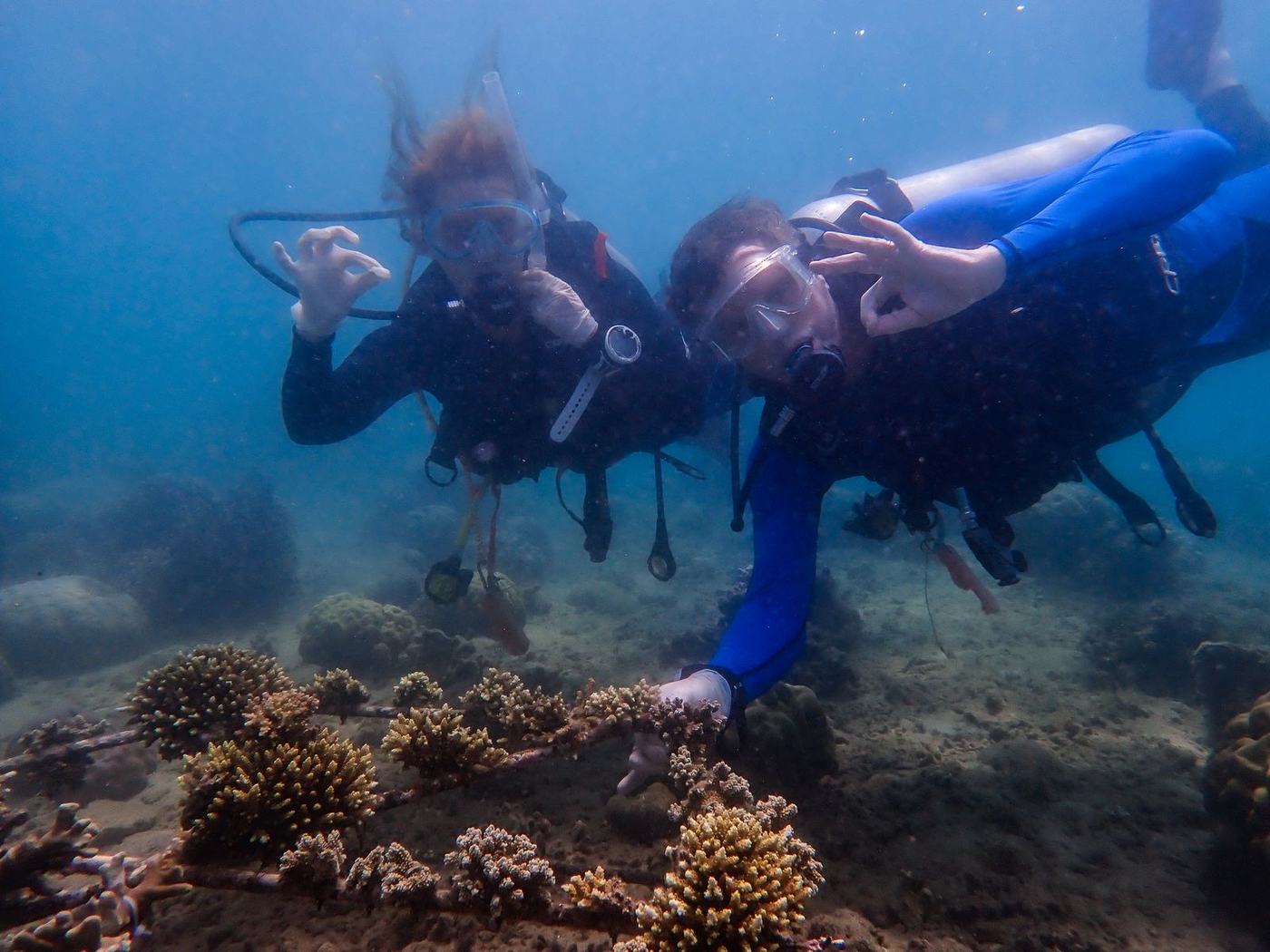
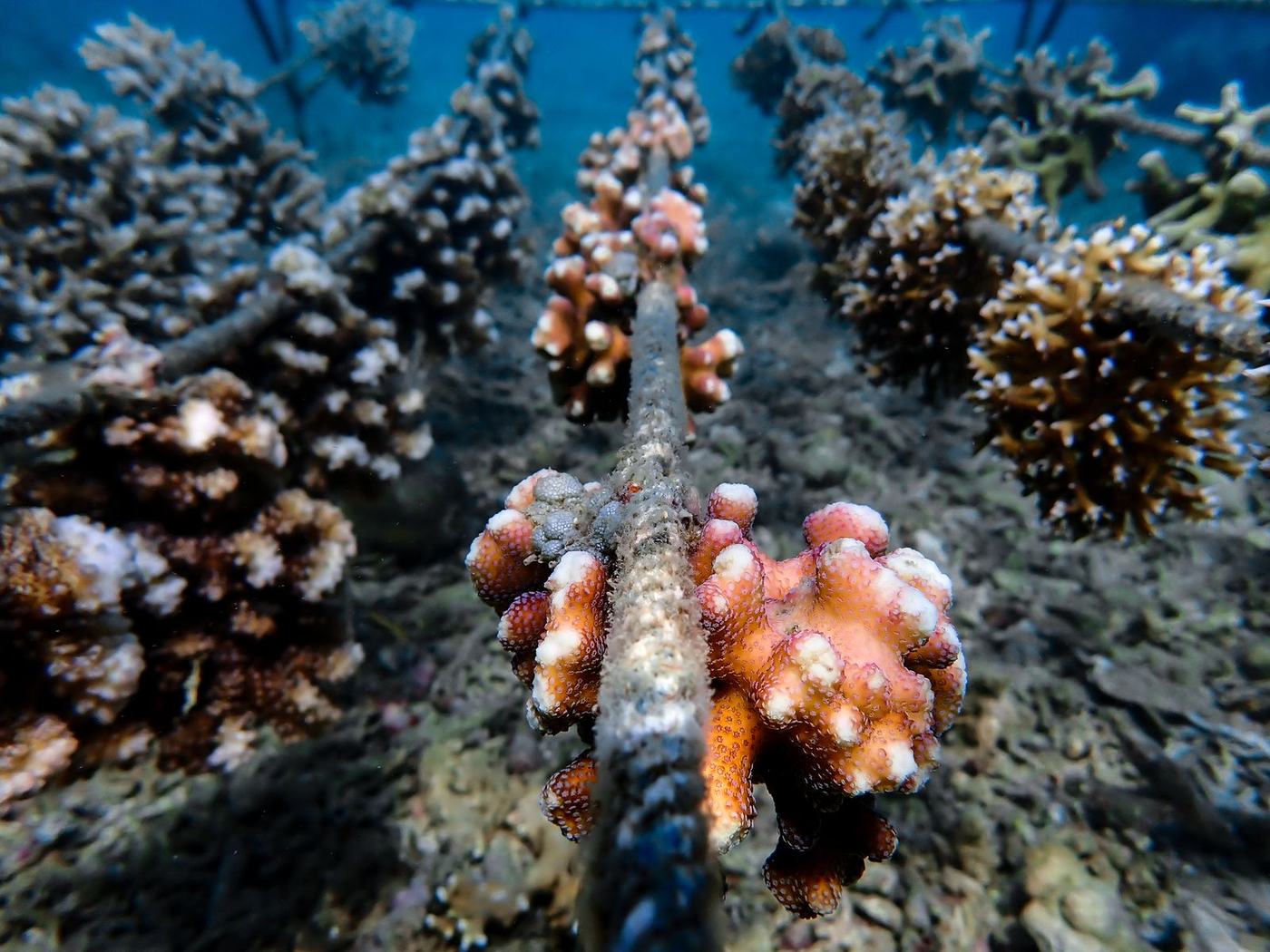
Coral identification, nursery and artificial reef maintenance, coral planting, and building and installing artificial reefs.
-
Survey diving
Survey techniques, BRUV surveys and footage review, and assisting our scientists on Diver Operated Video.
-
Species identification
Reef fish, corals, invertebrates, priority species and substrate, with assessments and certificates, so you leave with measurable evidence of what you know.
-
Priority species identification
How individual animals are identified from photographs, with Internet of Turtles for turtles and i3S software for manta rays.
-
Mangrove conservation
Another of Lombok's vital coastal ecosystems: mangrove ecology and restoration, with practical planting experience.
Professional diving
The dive training runs alongside the conservation work rather than before it.
- Progression through to PADI Divemaster
- Dive theory, physics and physiology
- Practical rescue skills and problem management
- Supervising and assisting certified divers
- Dive planning, briefing and risk assessment
- Building the logged experience a professional rating requires
Coral reefs and restoration
Working on the reef as a professional, not only as a student.
- Weekly coral nursery maintenance
- Artificial reef maintenance: controlling coral predators and removing competition
- Frame and MARS plants, attaching coral fragments to new structures
- Building and installing frames, MARS blocks and coral nurseries
- Clearing macroalgae from restoration sites
Coral fragmentation, growth monitoring and restoration site assessment are part of the Advanced Conservation Science Add-On.
Survey diving
Survey methods, taught properly and then used for real.
- A survey techniques briefing, practised on land and then underwater
- Quadrat surveys contributing to the ReefCloud global database
- BRUV deployment, retrieval and footage review
- Assisting a scientist on Diver Operated Video surveys
- Debris dives, logged with PADI AWARE
Long-term reef monitoring surveys and data analysis are part of the Advanced Conservation Science Add-On.
Species identification
Identification is the skill everything else depends on: a survey is only as good as the names on it.
- Indo-Pacific reef fish families and species
- Coral lifeforms and substrate
- Invertebrates
- Priority species
- Working to our survey identification list
- Assessment before you record data that enters the dataset
Priority species identification
The animals people remember, recorded properly.
- Turtle identification with Internet of Turtles, a global database
- Learning how manta rays are identified with i3S Spot software
- Logging priority species during surveys and dives
- Reviewing BRUV footage for priority species
Mangrove conservation
Reef work alone misses how this coastline actually functions.
- An introductory walk through the mangroves around SORCE
- Collecting propagules and planting them in our nursery
- Transplanting nursery-grown mangroves at our restoration sites, in the wet season
- Mangrove ecology lectures
Build more into your expedition
Stay longer, leave with more
Eight weeks provides an intensive Conservation Divemaster experience. Staying longer gives you the opportunity to develop additional qualifications and scientific skills, included in your expedition fee once you reach the relevant duration.
-
Stay 10+ weeks
PADI Dive Against Debris
Learn how to conduct underwater debris surveys and contribute meaningful data to global efforts to understand and reduce marine pollution.
PADI AWARE
Develop your understanding of the threats facing the ocean and the role divers can play in protecting marine environments.
No additional course cost
-
Stay 12+ weeks
Reef Check Eco-Diver
Train in internationally recognised coral reef monitoring methodologies and develop further practical experience in reef assessment.
Awarded in addition to the certifications above, so a twelve week stay leaves with all three.
No additional course cost
Duration and start dates
Four cohorts a year
Unlike our flexible-start expeditions, Conservation Divemaster cohorts begin four times each year, so you progress through the expedition with a dedicated group of trainees.
Your diving now
Cohort 1
First Monday of March
Cohort 2
10 weeks after cohort 1
Cohort 3
10 weeks after cohort 2
Cohort 4
10 weeks after cohort 3
The minimum is eight weeks, and you are welcome, and encouraged, to stay longer for more experience, qualifications and training. If you need prerequisite PADI training, you arrive before your cohort starts, so you are ready to begin with everyone else.
Fees
What it costs
£3,850
A 20% deposit holds your place, with the balance due ten weeks before you arrive. PADI courses and the Marine Park fee are charged separately.
Included
- PADI Divemaster training
- PADI Divemaster materials and crew pack
- Marine conservation lecture and workshop programme
- Practical conservation field training
- Coral restoration training and participation
- Marine ecosystem and species identification training
- Identification assessments and certificates
- BRUV and marine monitoring experience
- Priority species photo-identification, including turtles with Internet of Turtles
- Mangrove conservation and restoration
- Artificial reef activities
- Unlimited training and survey dives, typically two to three a day, Tuesday to Saturday, weather permitting
- Career guidance
- Scuba equipment rental: tanks, BCD, regulator and weights
- All necessary research and field equipment
- A private room in a traditional bamboo lodge, or a shared room on request
- Three meals a day, seven days a week
- Unlimited drinking water, tea and coffee
- Sunday Funday: an extra fun dive, team social and dinner
- Access to the outdoor gym, yoga space, and volleyball and basketball courts
- 24-hour in-country support
- A visa information pack, and contact details for a recommended visa agent
Not included
- Marine Park entrance fee, Rp. 200,000 - 800,000 depending on length of stay, payable on site
- Flights and transfers
- Visa costs
- Travel and diving insurance
- Personal dive gear: mask, fins and wetsuit or rashsuit
- Dive computer rental, available on site
- Internet: there is no Wi-Fi on site. Buy an Indonesian SIM card with mobile data, for your phone or a portable hotspot
- Additional food, drinks and excursions
- Annual PADI professional membership fees
- Prerequisite PADI courses, where required
- Advanced Conservation Science Add-On
Before you book
What we ask of you
Everything you'll need to join us 
Not quite there yet? Don't worry: every diving requirement can be worked towards with us, even if you have never dived. You simply arrive a little earlier.
Not there yet? See how to get there- Age
- 18 or over
- English
- Able to communicate effectively in English
- Fitness
- A good level of physical fitness, and comfortable with practical activities in a tropical climate
- Medical
- Medically evaluated and cleared for diving by a physician within the previous 12 months
- Training
- Recognised Advanced Open Water and Rescue Diver certifications, with proof of both
- EFR
- A valid Emergency First Response (EFR) certification or recognised equivalent
- Dives
- At least 40 logged dives, with proof: a logbook or a dive-logging app
Not there yet? You can still join us.
If you don't yet meet the diving prerequisites, you can complete the necessary training with SORCE before your Conservation Divemaster begins. Allow approximately:
| Current level | Additional training before CDM | Minimum total stay |
|---|---|---|
| Rescue + EFR and 40+ dives | None | 8 weeks |
| Needs Rescue / EFR | +1 to 2 weeks | 9 to 10+ weeks |
| Needs Advanced + Rescue / EFR | +3 weeks | 11+ weeks |
| No existing dive certification | +4 weeks | 12+ weeks |
Training times also depend on your diving experience and how recently you last dived, not only your certification level. Additional time may be required to reach the 40 logged-dive prerequisite, depending on your existing number of dives. Even if you've never dived before, you can work towards your Conservation Divemaster with SORCE. You simply need to arrive earlier and allow enough time to complete the required training and experience.
Advanced Conservation Science
Take your scientific training further
For university students and graduates in relevant scientific disciplines, the Advanced Conservation Science Add-On builds a deeper level of scientific training into your Conservation Divemaster. Participants staying beyond the minimum eight weeks can use that additional time to develop more advanced research and analytical skills.
- Coral fragmentation, and deep cleans of nurseries and artificial reefs
- Coral growth monitoring, with photos measured in ImageJ
- Coral restoration site assessment
- Long-term reef monitoring surveys: fish, coral cover and invertebrates
- Coral genus, mangrove and seagrass identification
- Image analysis with CPCe and ReefCloud
- Water sample analysis
- Drone aerial monitoring and an introduction to GIS
- Scientific data entry and management
Eligibility
The Advanced Conservation Science Add-On is available to participants who are enrolled in, or have completed, an undergraduate degree or higher in Marine Biology, Biology, Ecology, Conservation, Zoology, Oceanography or another relevant discipline; and who are joining the Conservation Divemaster for longer than the standard eight-week expedition.
The exact techniques available may vary according to current research activities and project requirements.
£50 per week beyond the standard eight, on top of the usual weekly fee, capped at £200, however long you stay.
Is it right for me?
This expedition could be right for you if you want to
Achieve your PADI Divemaster certification while developing real-world professional diving experience.
Go beyond recreational diving and learn how underwater skills can contribute to conservation, restoration and ecological monitoring.
Work alongside marine scientists and conservation professionals across active projects and multiple tropical marine ecosystems.
Build a distinctive combination of professional diving, conservation knowledge, field experience and practical skills.
Eligible university students and graduates can add Advanced Conservation Science training to develop higher-level research, survey and analytical skills.
01 of 05
Achieve your PADI Divemaster certification while developing real-world professional diving experience.
02 of 05
Go beyond recreational diving and learn how underwater skills can contribute to conservation, restoration and ecological monitoring.
03 of 05
Work alongside marine scientists and conservation professionals across active projects and multiple tropical marine ecosystems.
04 of 05
Build a distinctive combination of professional diving, conservation knowledge, field experience and practical skills.
05 of 05
Eligible university students and graduates can add Advanced Conservation Science training to develop higher-level research, survey and analytical skills.
Ready to become a Conservation Divemaster?
Just four cohorts a year, so book early.
Cohorts start every 10 weeks from the first Monday of March. Book online and tell us your dates, and we'll come back to you about availability. If you have questions first, just get in touch.