
Research Thesis Placement
Design, run and complete an independent marine research project, with a supervisor alongside you from planning to write-up.
Research Thesis Placement (RTP)
Turn field research into your dissertation or thesis
The Research Thesis Placement is designed for undergraduate and postgraduate students who need to design, conduct and complete an independent marine research project as part of their degree thesis or dissertation.
Before arrival you will be paired with one of our scientists, who acts as your external supervisor and works alongside you and your university to help plan and refine your project. Once on site, you will train with our staff and gain hands-on field experience before implementing your own research.
The placement is built to develop your practical, analytical and leadership skills, including the rare chance to direct Conservation Research Assistants and manage your own field research. You will leave with real-world experience, professional connections and an independent project that can make a tangible difference.
Dissertation and thesis support is included, from project design through to reporting.

- Minimum age
- 18
- Duration
- 6 - 25 weeks
- Start dates
- Any Monday
- Entry level
- University students
- From
- £2,750
What you'll do
On the reef and off it
What the placement gives you that a general expedition does not.
-
A named supervisor
You are paired with one of our scientists before you travel, and they work with you and your university to shape the project.
-
Your own project
You design it, run it and report on it, with our team and our Conservation Research Assistants supporting your data collection.
-

Project ideas
Projects are built around the work SORCE already does and the equipment we have on site.
-
Survey methods and data
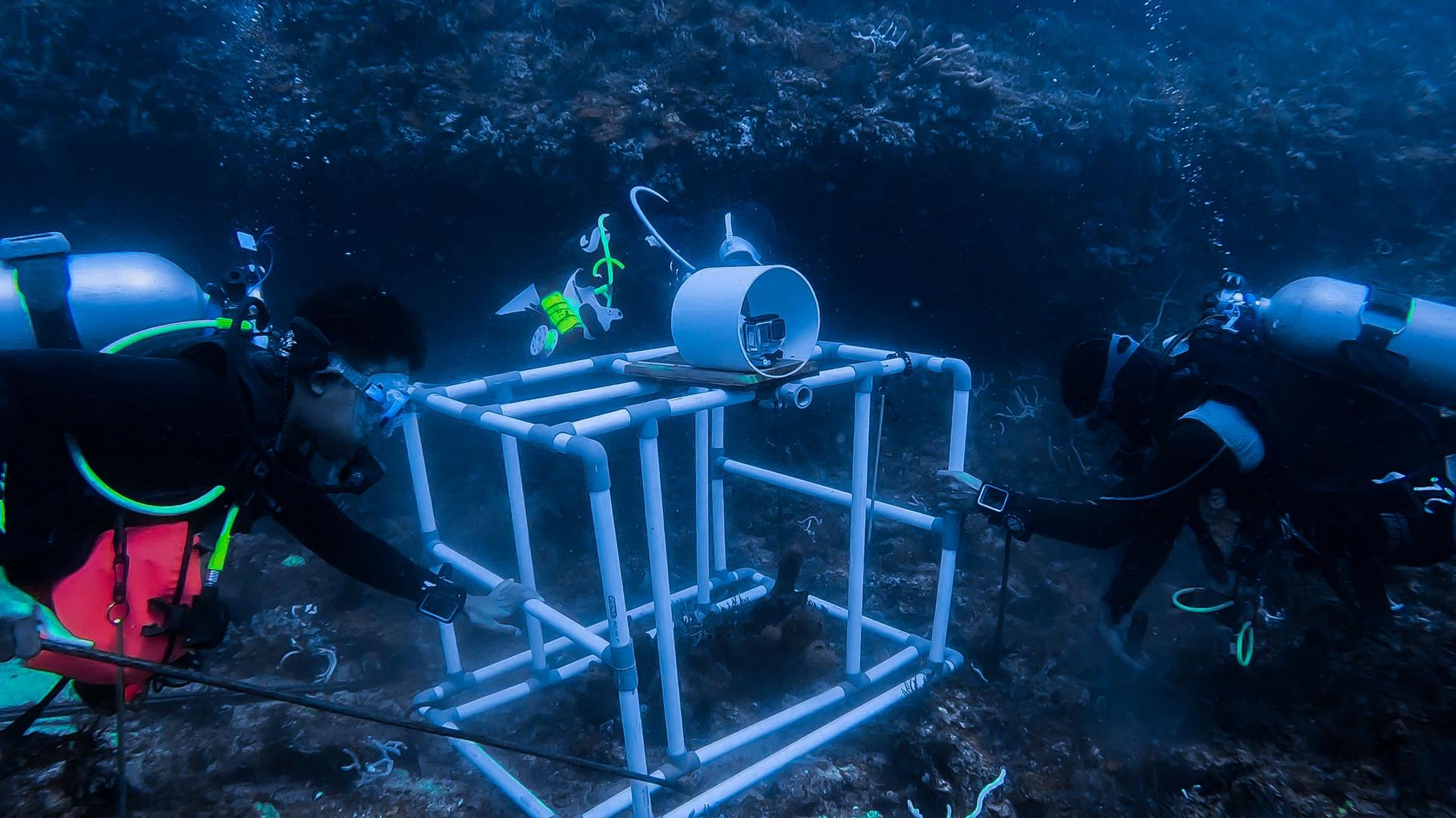
BRUV and DOV surveys, quadrat photo surveys and our long-term monitoring data, alongside the standard methods.
-
Wider contribution
Around your project, you can join our wider conservation and research work across several marine ecosystems.
-
Publishing and data
Hoping to publish? Talk to us early, because publishing needs the right visa and permits.
A named supervisor
One scientist responsible for your project from planning through to write-up.
- Scoping your question against what is feasible here
- Survey design and method selection
- Scheduled supervision throughout the placement
- Guidance on analysis and interpretation
- Feedback on drafts before you submit
- Liaison with your university supervisor where needed
Your own project
An independent piece of research, not a set exercise with a known answer.
- Defining your research question
- Writing a workable methodology
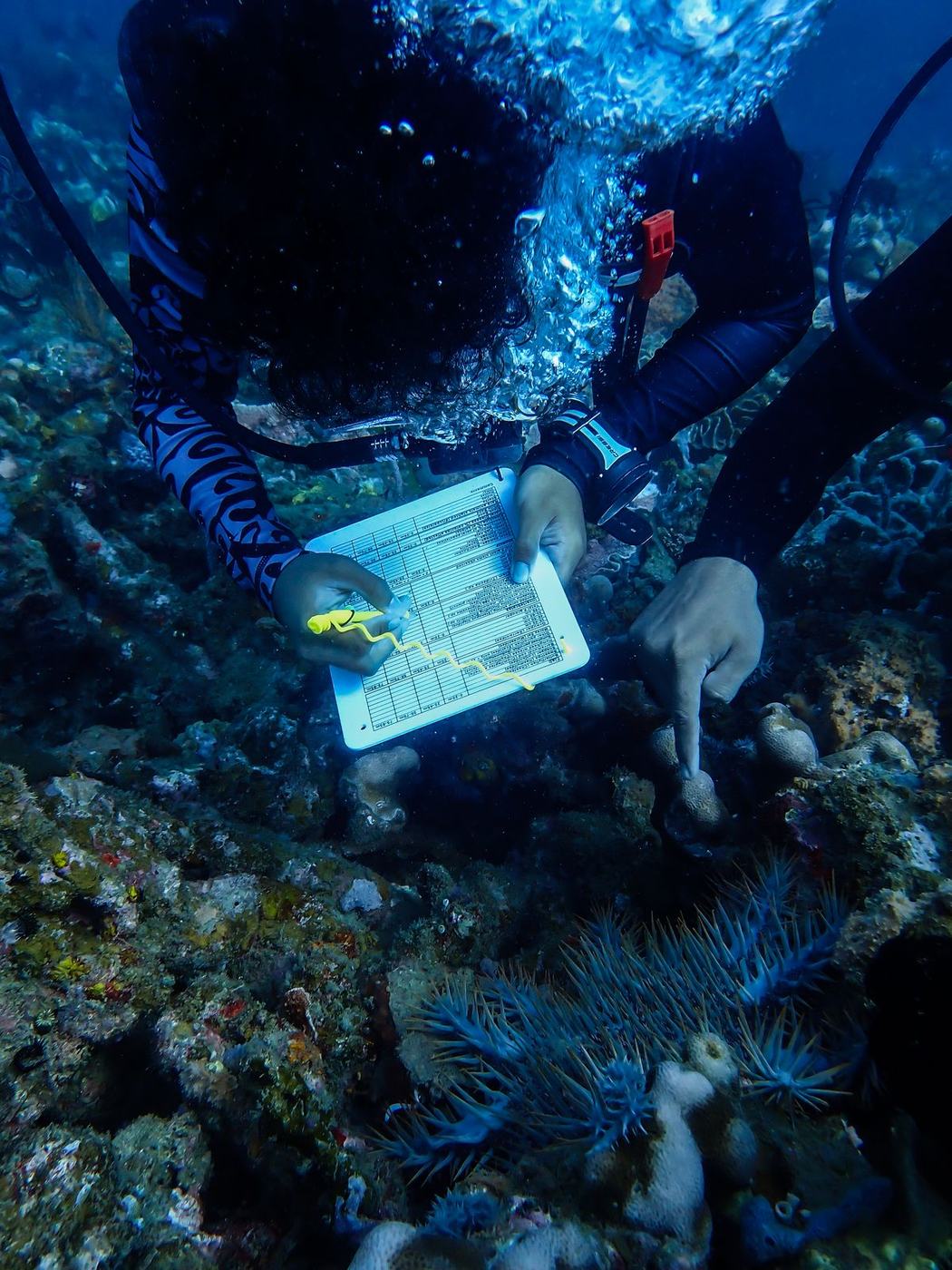
- Collecting your own primary data
- Managing your fieldwork schedule
- Analysing and writing up your results
- Presenting your findings to the team
Project ideas
Some of the directions a project could take. Your supervisor helps you shape your own.
- Coral restoration: fragment growth and survival across nursery or artificial reef designs
- Fish and priority species communities, from BRUV and DOV footage
- Reef health and substrate composition, from quadrat photo surveys
- Turtle numbers and site use, from photo-identification
- Mangrove restoration: nursery growth and transplant survival
- Seagrass health and species composition
- Water quality across our restoration sites
- Marine debris: what is found, and where
Projects need to fit SORCE's ongoing work and the equipment on site. If your idea is not listed, ask us: we can often make it work.
Survey methods and data
The equipment and datasets that make a dissertation feasible in the time available.
- BRUV systems and recorded footage
- Diver Operated Video
- Quadrat and underwater photo survey archives
- Long-term monitoring data across our survey sites
- Analysis software including CPCe, ImageJ, ReefCloud and i3S
- Water quality testing equipment
- GPS and GIS mapping
Wider contribution
Your work does not stop at your own submission.
- Findings feed into our monitoring programme
- Data added to the long-term datasets where suitable
- Joining our restoration, survey and species identification work around your project
- Informing future survey design at these sites
- Supporting evidence for marine management decisions
Publishing and data
Publishing work from your placement takes planning.
- If you might want to publish, contact us about the correct visa and permits before you book
- Plan well ahead: up to a year before your placement is recommended
- All data collected in association with the RTP remains the academic property of SORCE
- Using the data beyond your dissertation or thesis needs SORCE's written approval


Skills you'll gain
What you'll take away
Every RTP student develops the same core set of skills, whatever their subject. Beyond these, it depends on your project and conditions on site.
- Project design, planning, implementation and reporting
- Project leadership and team management
- Data collection, processing and analysis
- Scientific diving, buoyancy control and eco-aware underwater research
- Professional collaboration with marine scientists and NGOs
- Presenting your findings to scientists and peers
- In-depth knowledge of Indo-Pacific coral reefs, mangroves, seagrasses, turtles, sharks and rays
- Conservation methodologies including restoration, monitoring and ecological assessment
Specialised experience, depending on your project
- Coral reef restoration and monitoring techniques
- BRUV, Diver Operated Video and quadrat photo surveys
- Turtle identification, population analysis and conservation methods
- Shark and ray ecology
- Mangrove and seagrass survey and restoration techniques
- Water quality sampling and analysis
- Ecological assessment and restoration planning
If your area of interest is not listed, contact us: we can often facilitate additional projects.
Fees
What it costs
£2,750
A 20% deposit holds your place, with the balance due ten weeks before you arrive. PADI courses and the Marine Park fee are charged separately.
Included
- Your own research project, planned and supervised with a SORCE scientist
- Equipment for your project and for taking part in SORCE projects
- Introductory training in marine biology, reef ecology and conservation methods
- Workshops covering species ID, coral, mangrove and seagrass restoration, eco-diving and more
- Access to our survey methods, including DOVs and BRUVs
- Unlimited training and survey dives, typically two to three a day, Tuesday to Saturday, weather permitting
- Scuba equipment rental: tanks, BCD, regulator and weights
- All necessary research and field equipment
- A private room in a traditional bamboo lodge, or a shared room on request
- Three meals a day, seven days a week
- Unlimited drinking water, tea and coffee
- Sunday Funday: an extra fun dive, team social and dinner
- Access to the outdoor gym, yoga space, and volleyball and basketball courts
- 24-hour in-country support
- A visa information pack, and contact details for a recommended visa agent
Not included
- Marine Park entrance fee, Rp. 400,000 - 800,000 depending on length of stay, payable on site
- Flights and transfers
- Visa costs
- Travel and diving insurance
- Personal dive gear: mask, fins and wetsuit or rashsuit
- Dive computer rental, available on site
- Internet: there is no Wi-Fi on site. Buy an Indonesian SIM card with mobile data, for your phone or a portable hotspot
- Additional food, drinks and excursions
Before you book
What we ask of you
Everything you'll need to join us 
Not quite there yet? Don't worry: if you are not yet a diver, dive training is available on site before your research begins.
Not sure you qualify? Ask us- Degree
- Currently enrolled in, or recently completed, a relevant undergraduate or postgraduate degree: biology, marine biology, oceanography, ecology, conservation, zoology or similar
- Age
- 18 or over
- Diving
- PADI Open Water certification or equivalent, with training available on site if required Dive courses
- Medical
- Fit to dive, confirmed on our medical form
- Length
- A minimum of 6 weeks - 6 to 8 weeks is recommended for sufficient data collection, and longer projects can be supported
- Start
- Expeditions start and finish on Mondays
Is it right for me?
This expedition could be right for you if you want to
Design, conduct and complete an independent marine research project as part of your degree thesis or dissertation.
Gather the data your project needs, with BRUV, Diver Operated Video and long-term monitoring data to draw on.
Take the rare chance to direct Conservation Research Assistants and manage your own field research.
See your findings feed into our monitoring programme, and potentially into the evidence behind marine management decisions.
Leave with real-world experience, professional connections and an independent project that can make a tangible difference.
01 of 05
Design, conduct and complete an independent marine research project as part of your degree thesis or dissertation.
02 of 05
Gather the data your project needs, with BRUV, Diver Operated Video and long-term monitoring data to draw on.
03 of 05
Take the rare chance to direct Conservation Research Assistants and manage your own field research.
04 of 05
See your findings feed into our monitoring programme, and potentially into the evidence behind marine management decisions.
05 of 05
Leave with real-world experience, professional connections and an independent project that can make a tangible difference.
Ready to start your Research Thesis Placement?
Spaces are limited, so book early.
Book online and tell us your dates, and we'll come back to you about availability. If you have questions first, just get in touch.