
Conservation
Science into action. Restoring habitat, reducing pressure and protecting the connections between reef, mangrove and seagrass in southwest Lombok.
Marine conservation
Research tells us what is happening Conservation is what we do about it
SORCE works across the connected coastal ecosystems of southwest Lombok: protecting habitat that still functions, restoring what has been degraded, and reducing the pressures responsible for the decline.
Our programmes are designed and continually refined using our own field research. Restoration is a long-term commitment, judged by what survives. Sites are assessed, interventions chosen, work carried out, and outcomes monitored.
From a single coral fragment to marine protected area management, our conservation runs at several scales at once, because protecting an ecosystem takes more than one solution.
Southwest Lombok
By the numbers
Restoration you can measure
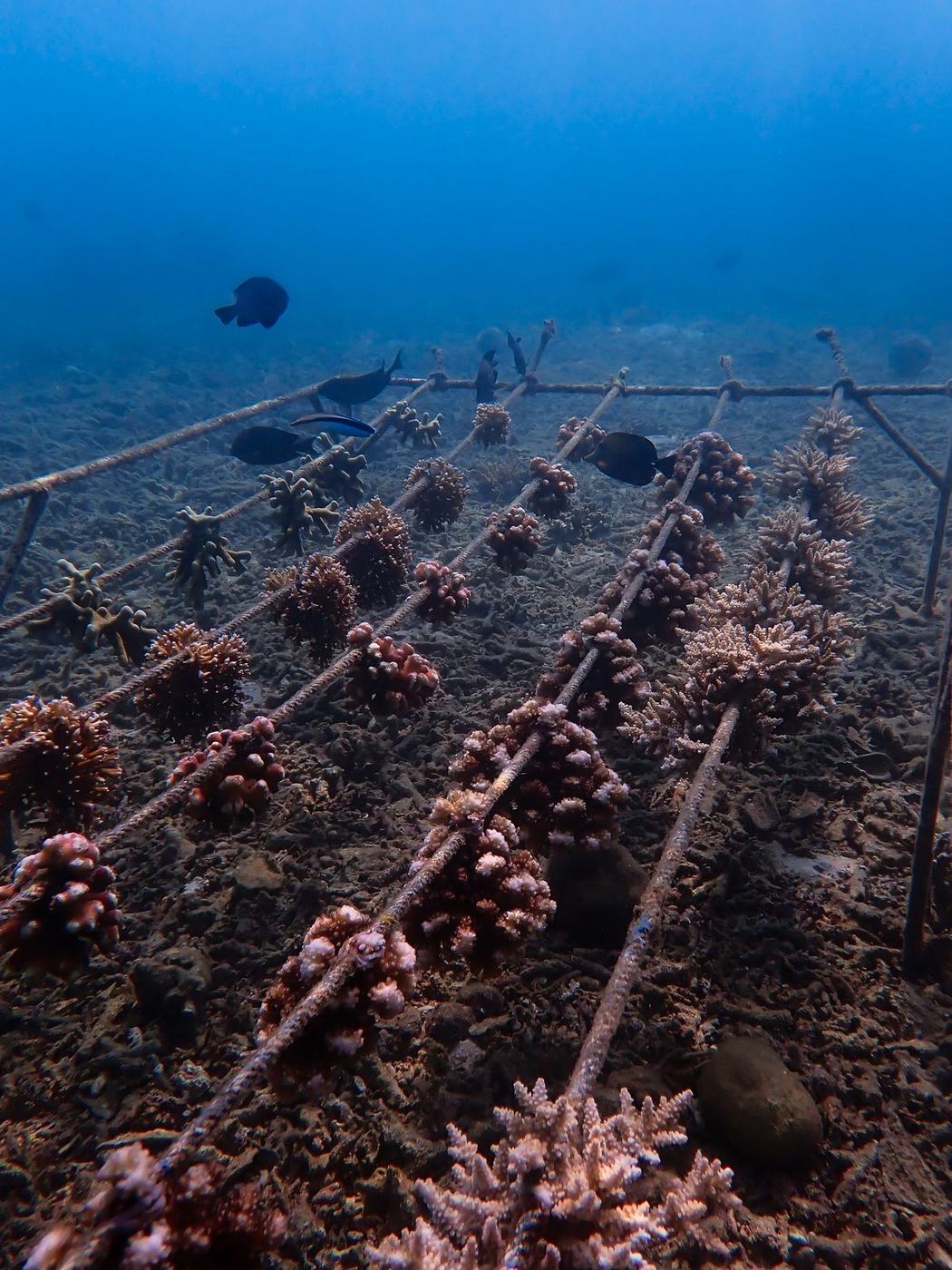
The coral tree study followed seven coral taxa over six months. Restoration figures are only worth publishing once they can be stood behind.
- 30,000
- Mangrove nursery capacity, at Siung
- 46
- MPA monitoring stations
- 98
- Coral fragments in our coral tree study
- 85 - 100%
- Survival across the monitored groups
What we do
Five programmes, one seascape
 01 · Coral reef restoration
Rebuilding damaged reef habitat
98 Fragments in our coral tree study
Reefs face pressure at every scale, from marine heatwaves to destructive fishing, pollution and physical damage. Some recover on their own. Others have lost so much living coral or structural complexity that careful intervention is needed.
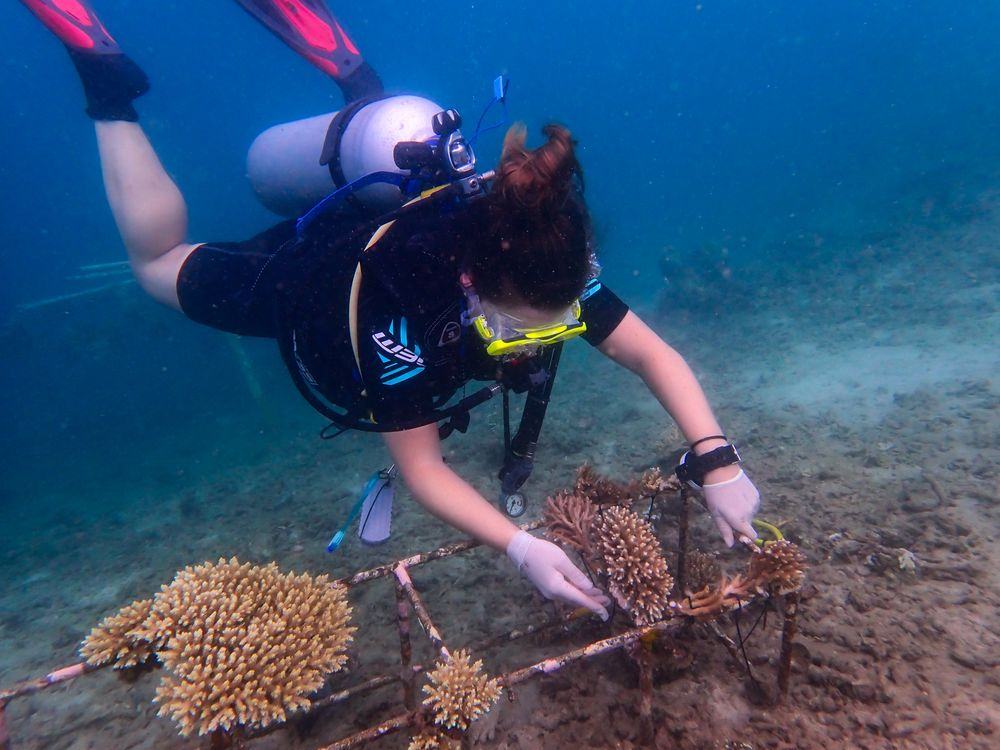
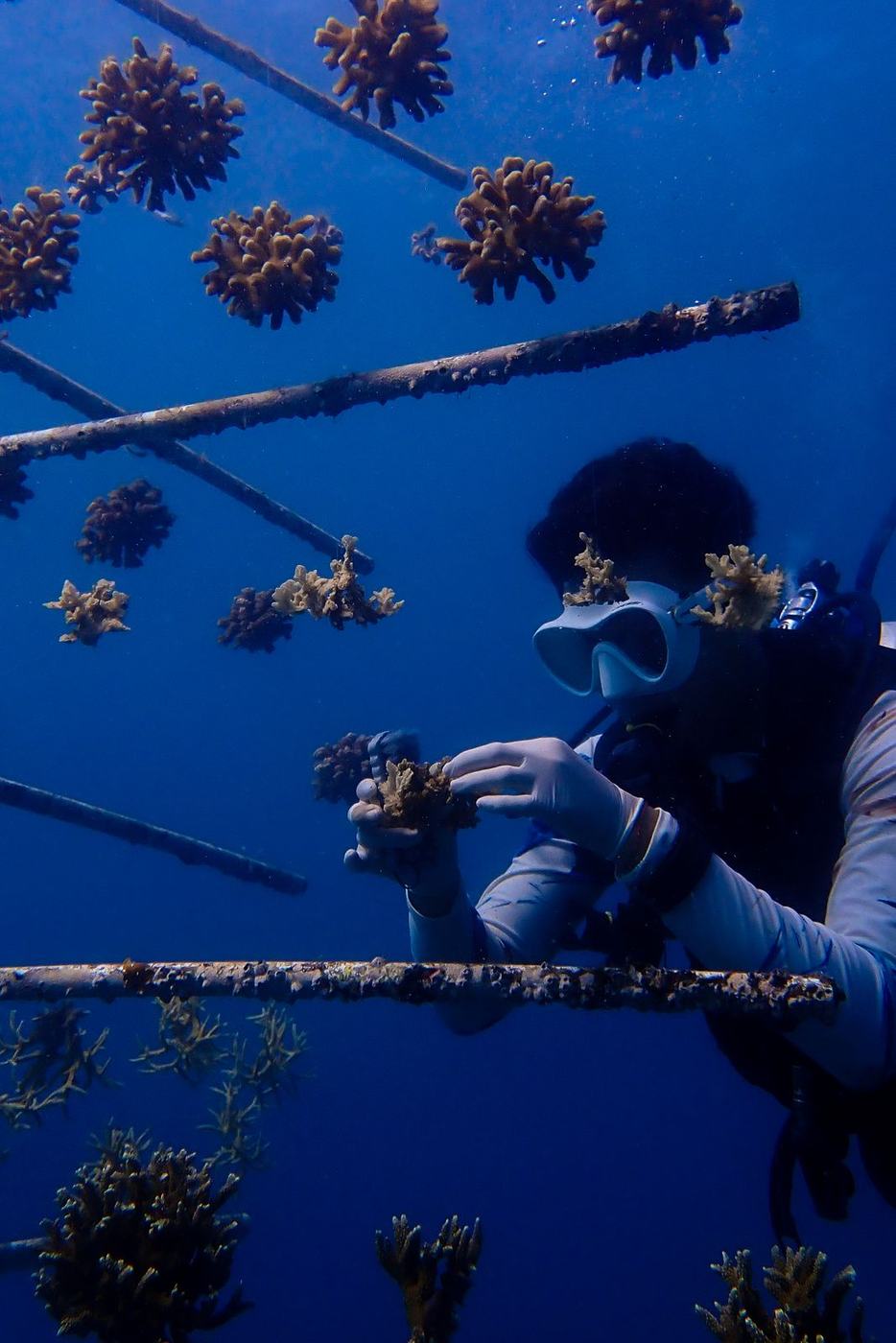
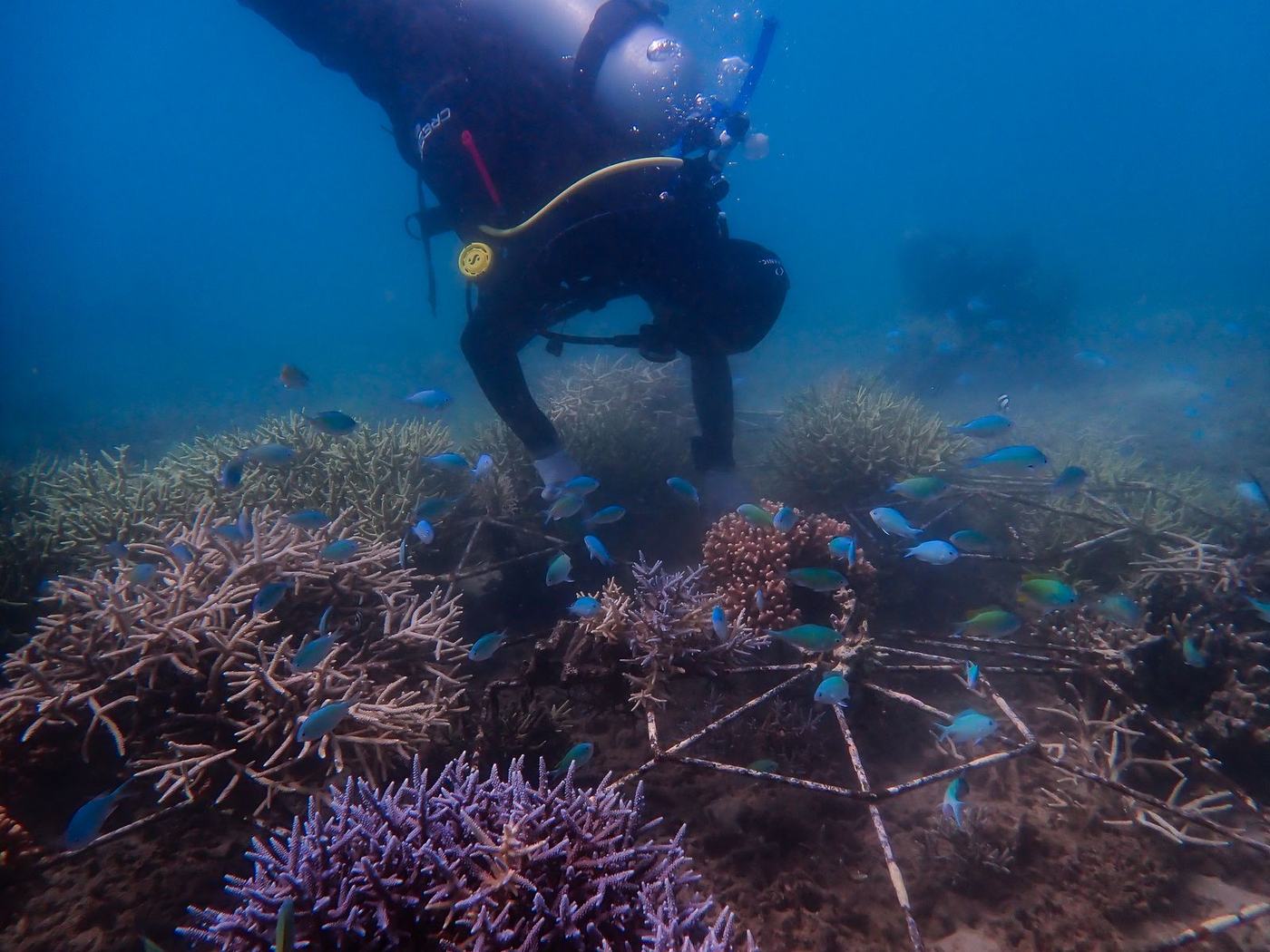
Our programme combines propagation, nursery systems, outplanting, artificial reef construction and long-term monitoring. Species respond differently to nursery conditions, which is exactly why monitoring is part of the programme rather than an afterthought: a recent coral tree study followed 98 fragments across seven taxa over six months, with survival between about 85 and 100%.
The work, end to end
- Identifying and assessing degraded reef
- Collecting corals of opportunity
- Fragmentation and propagation
- Building and maintaining nurseries
- Monitoring fragment health, survival and growth
- Outplanting established coral
- Building artificial reef structures
- Monitoring restoration sites after deployment
- Testing and refining the techniques
-
 98
Fragments in our coral tree study
-
 7
Coral taxa monitored
-
 85 - 100%
Survival across the monitored groups
 02 · Artificial reefs
Structure, not just coral
24 Structures deployed
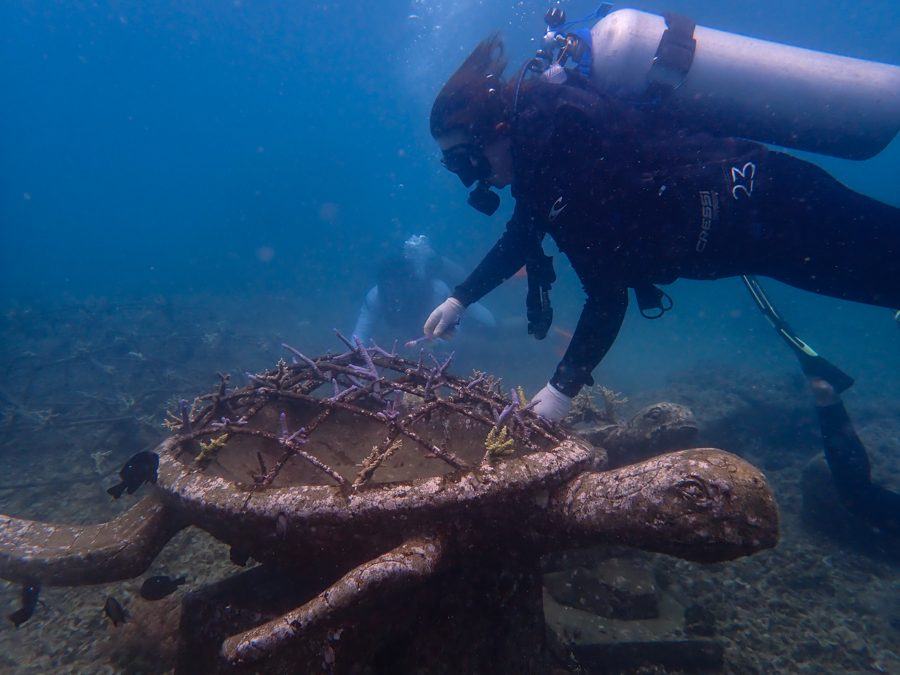
Where physical reef structure has been badly reduced, restoring coral alone does not address the loss of complexity. So we design and build artificial reef structures for deployment at carefully chosen sites.
They give stable substrate for restoration while returning physical complexity to barren ground. Building them also teaches something: reef recovery is about habitat, structure, species interactions and ecological processes.
We are already seeing fish using structures in previously barren areas. These sites are young, and we make no claim of ecosystem-scale restoration yet. Long-term monitoring will tell us how those communities develop.
-
 24
Structures deployed
-
6
Deployment sites
-
 3
Structure designs in use
 03 · Mangrove restoration
Growing forests from the ground up
30,000 Nursery capacity at Siung
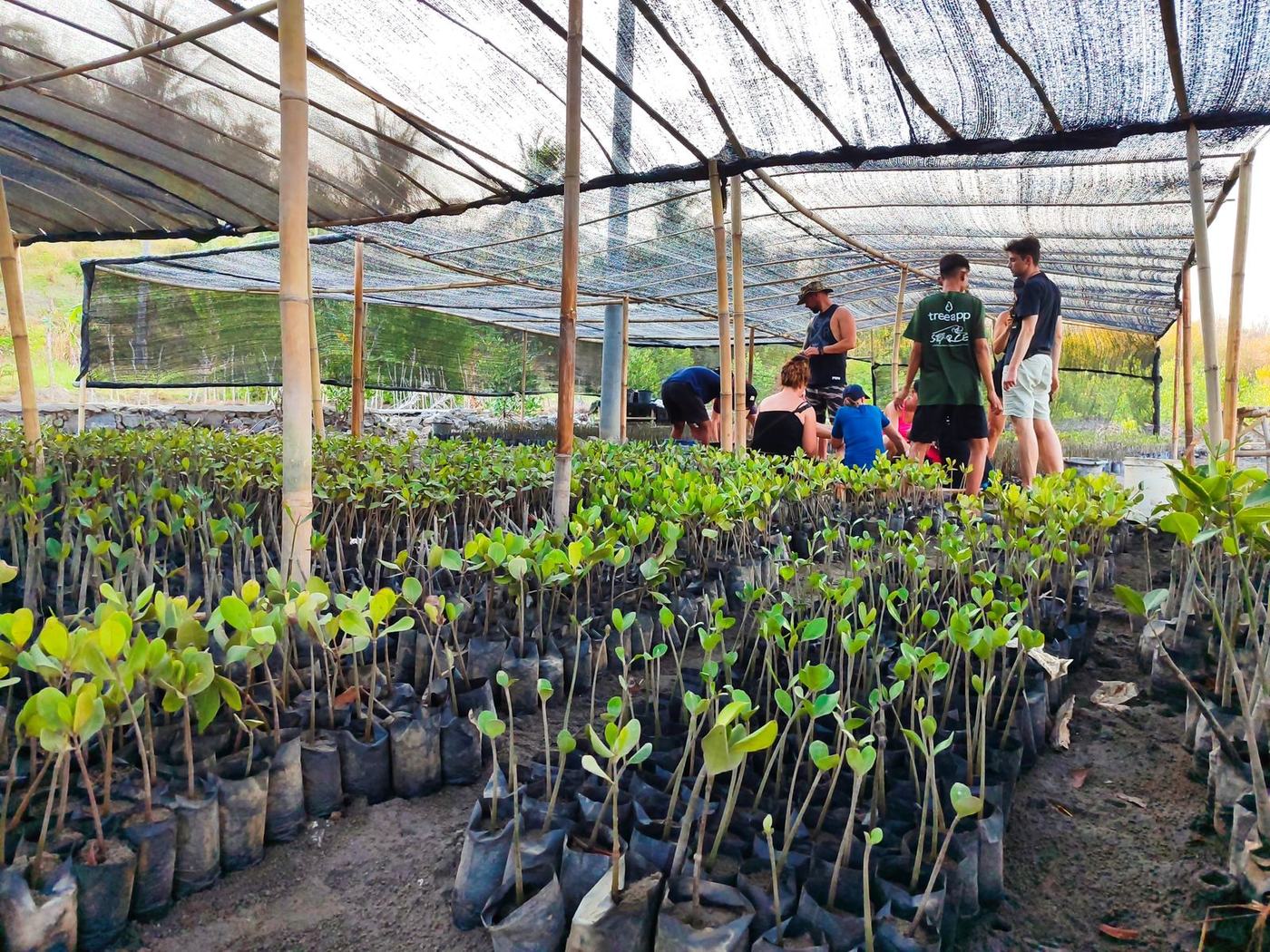
Mangroves connect land and sea. They shelter juvenile fish, hold coastlines together, trap sediment, support fisheries, store carbon and protect the ecosystems beyond them. Where they are removed, the effects reach well past the trees: the marine life that depended on them is lost, and the coast is left exposed to storms, erosion and flooding.
Our programme runs from site assessment and propagule collection (gathering the seedlings that grow on the parent tree) through nursery cultivation, site preparation and planting, to the monitoring that follows. The nursery at Siung, the small village beside our field centre in Sekotong, holds capacity for roughly 30,000 propagules.
Growing a propagule is not the goal. Restoration succeeds when mangroves survive, establish and eventually make a functioning ecosystem, which is why monitoring continues long after the planting day.
The work, end to end
- Mapping and assessing mangrove habitat
- Identifying suitable restoration sites
- Collecting propagules
- Nursery establishment and maintenance
- Growing propagules before transplantation
- Clearing waste and preparing degraded ground
- Community planting activities
- Transplantation
- Survival and growth monitoring
-
 30,000
Nursery capacity at Siung
-
18,500
Mangroves planted to date
-
5
Restoration sites
 04 · Marine debris
Removing what doesn't belong
4,200 Kilograms of waste removed
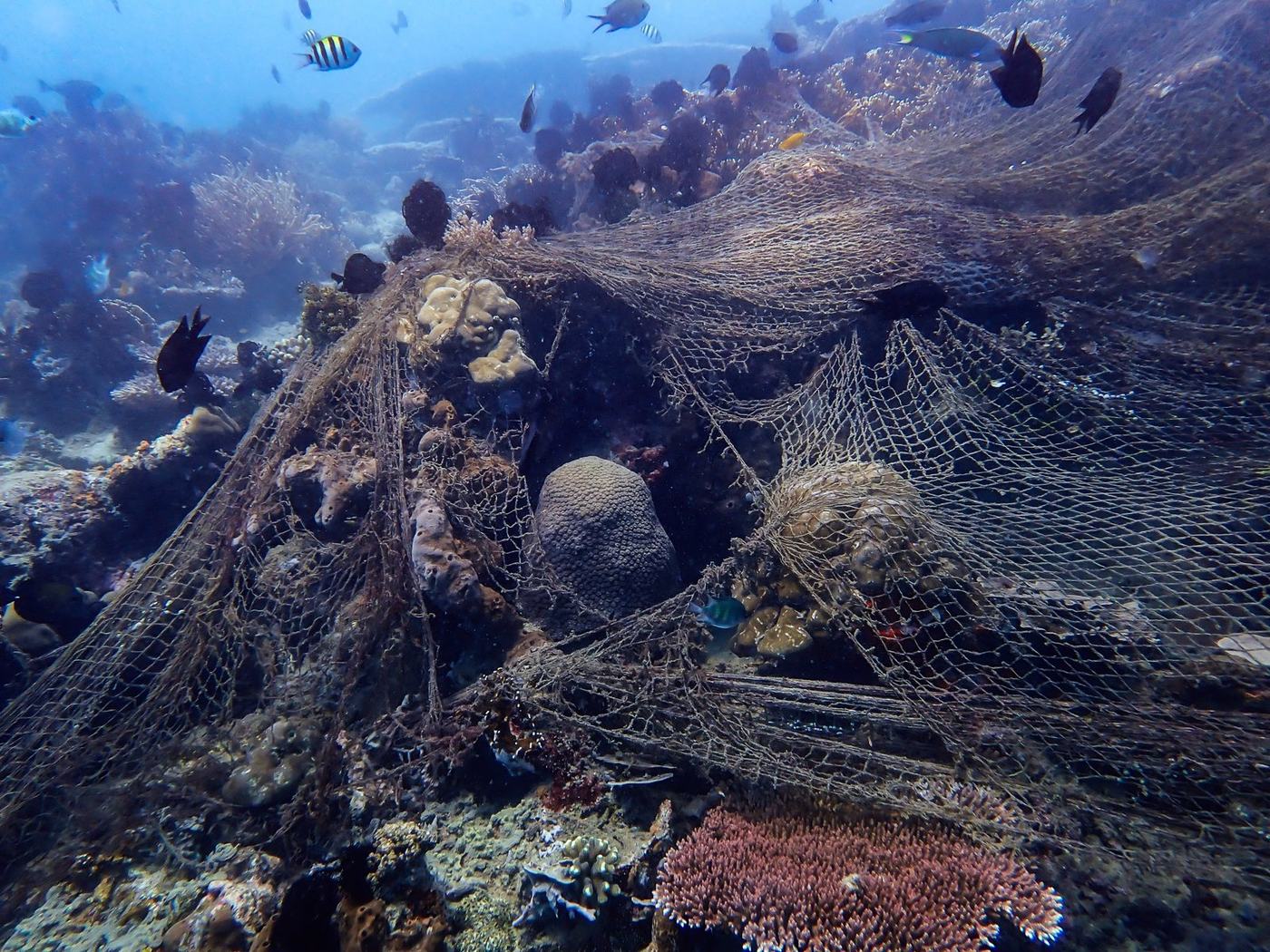
Plastic, abandoned fishing gear and other waste are a constant across marine and coastal environments. We build removal into everyday field operations rather than treating clean-ups as occasional events.
Where it is useful, debris is categorised and recorded, so removal also produces information about the types and likely sources of waste arriving here. Our divers can take PADI Dive Against Debris training, which links local surveys to a much wider citizen science effort.
Where we remove waste from
- Coral reefs
- The seabed
- Beaches and shorelines
- Mangrove habitats
- The coastal areas around our projects
-
 4,200
Kilograms of waste removed
-
 96
Clean-ups completed
-
5
Habitats cleaned regularly
 05 · Habitat connectivity
A reef cannot be understood on its own
46 MPA monitoring stations
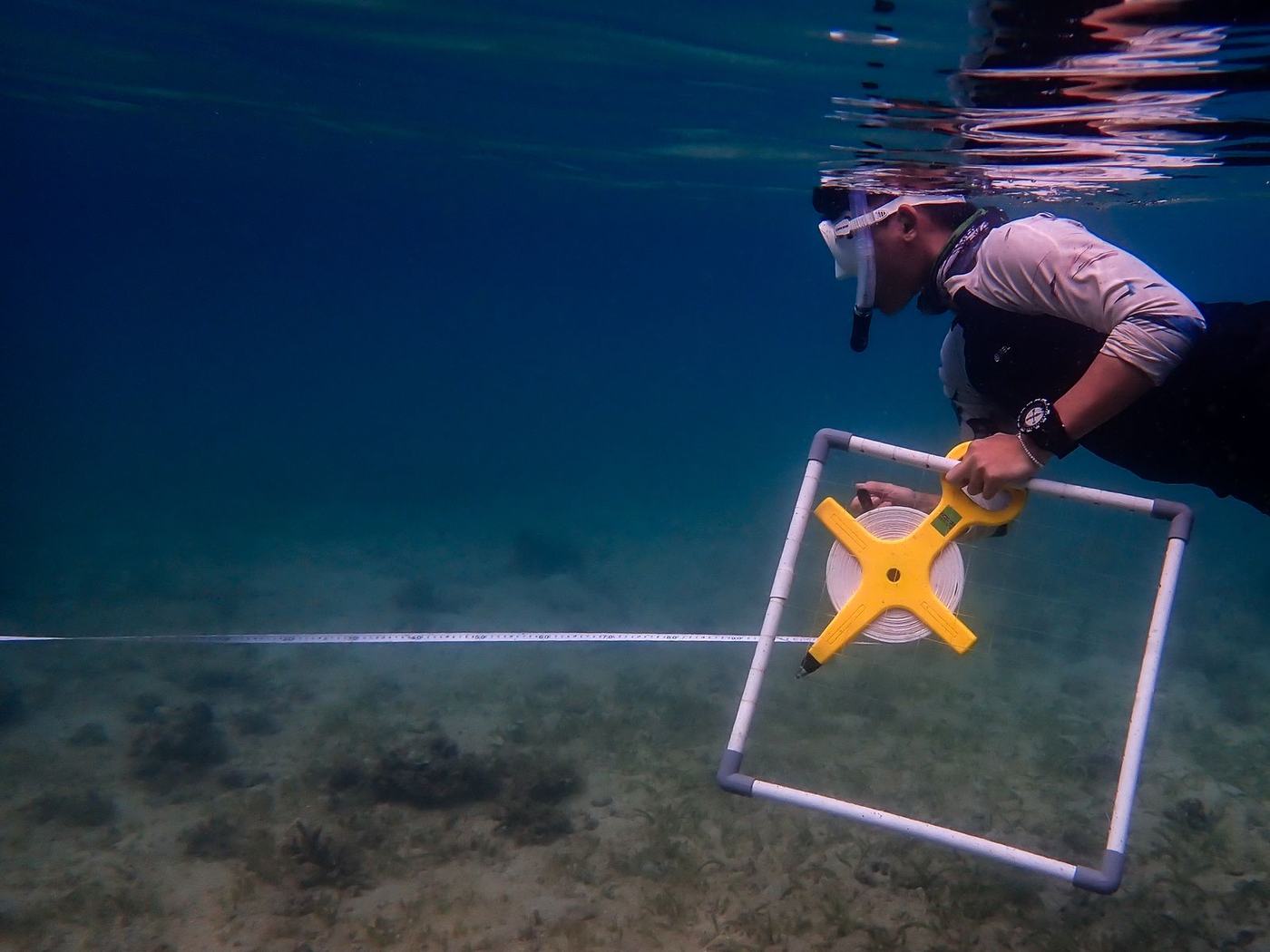
Animals, nutrients, sediment and energy move between coastal habitats, and many species depend on different ecosystems at different stages of life.
So we work at the scale of the seascape wherever we can. Mangrove restoration, reef work, seagrass monitoring and wider MPA research all feed the same understanding of how these habitats fit together, which helps us prioritise interventions that protect not only individual sites, but the connections between them.
-
46
MPA monitoring stations
-
3
Connected habitats studied
-
 22
Kilometres of coastline covered
Marine Protected Area
The work that is hard to photograph
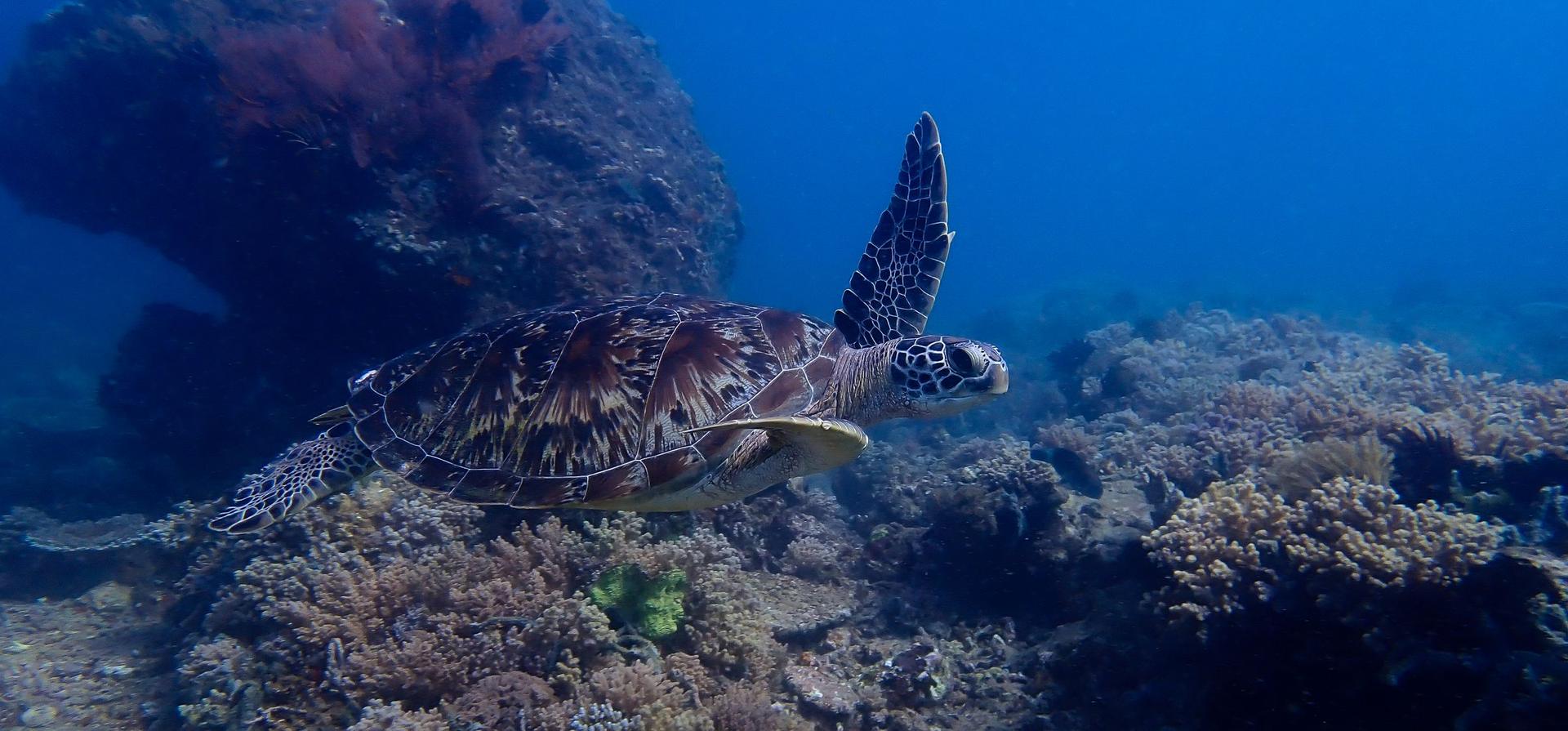
Some of our most important conservation cannot be photographed as easily as planting a coral. Our long-term ecological monitoring produces information that can support the management of the GITA NADA Marine Protected Area.
We work with the relevant Indonesian authorities and local stakeholders, providing ecological information and practical field knowledge that can feed into decisions about marine management, conservation priorities and sustainable use.
This is central to how we work. Conservation cannot succeed through restoration alone. Healthy ecosystems depend on effective protection, informed management, and addressing whatever caused the degradation in the first place.
Conservation through collaboration
Lasting conservation is built with the people who live here. We work alongside Indonesian scientists, government departments, universities, conservation organisations, communities and fishers.
- Indonesian marine and fisheries authorities
- Indonesian scientists and universities
- Conservation organisations
- Local communities and fishers
- Local conservation and diving partners
These relationships let expertise, resources and local knowledge move in both directions, so conservation is developed with the people who live alongside these ecosystems, rather than imposed on them.
Planting is the start, not the result
A coral planted is an action. A mangrove planted is an action. A reef structure deployed is an action. The question that matters comes afterwards: did it work?
Our research team monitors restoration so we can evaluate survival, growth and habitat condition over time. Where something performs well we expand it. Where it does not, we change it. That relationship between research, conservation and evaluation is how SORCE operates.
- Plant
- Monitor
- Evaluate
- Expand or change
Take part
Be part of the work
 Preparing coral fragments
 Maintaining nurseries
 Collecting monitoring data
 Building reef structures
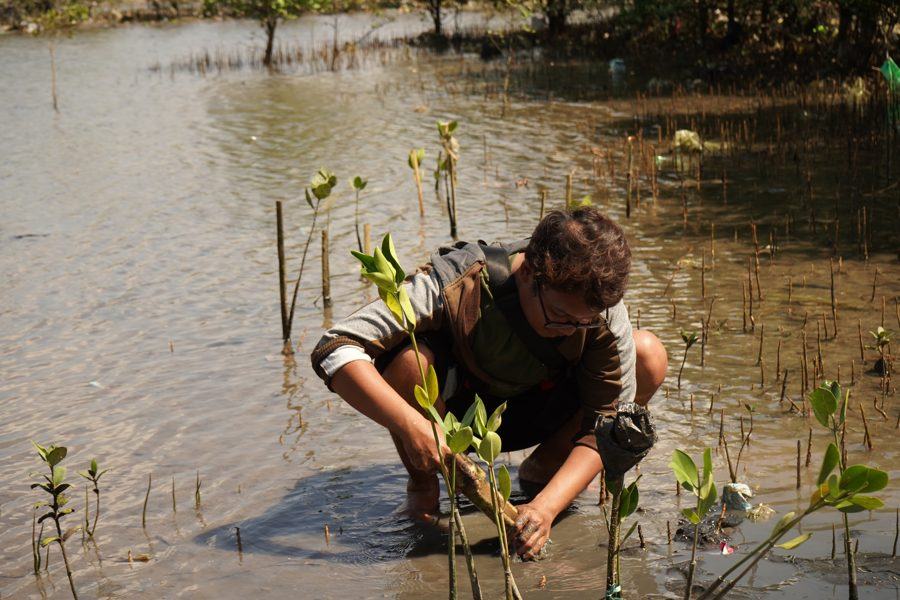 Planting mangroves
Much of this is carried out by our permanent scientific team alongside the students, research assistants, trainees and conservation participants who join us. Time at SORCE can mean genuine participation in the running work of a marine conservation field centre: preparing coral fragments, maintaining nurseries, collecting monitoring data, building reef structures, planting mangroves.
What happens during any particular stay depends on current project requirements, training, conditions and conservation priorities. Because these are real projects, the schedule follows what the ecosystems need.
Conservation starts with knowing what is there.
Our research decides where we act, and our education work is how the knowledge travels beyond the field centre.