
Conservation Research Assistant
Hands-on field experience across multiple marine ecosystems, alongside our science and conservation team.
Conservation Research Assistant (CRA)
Train as a marine scientist in Lombok, Indonesia
The SORCE Conservation Research Assistantship gives you the opportunity to train alongside our Marine Science and Conservation team, gaining hands-on field experience across multiple marine ecosystems.
It is designed for undergraduate students and early-career conservationists who want to develop practical skills, scientific knowledge and professional experience while contributing to real conservation projects.
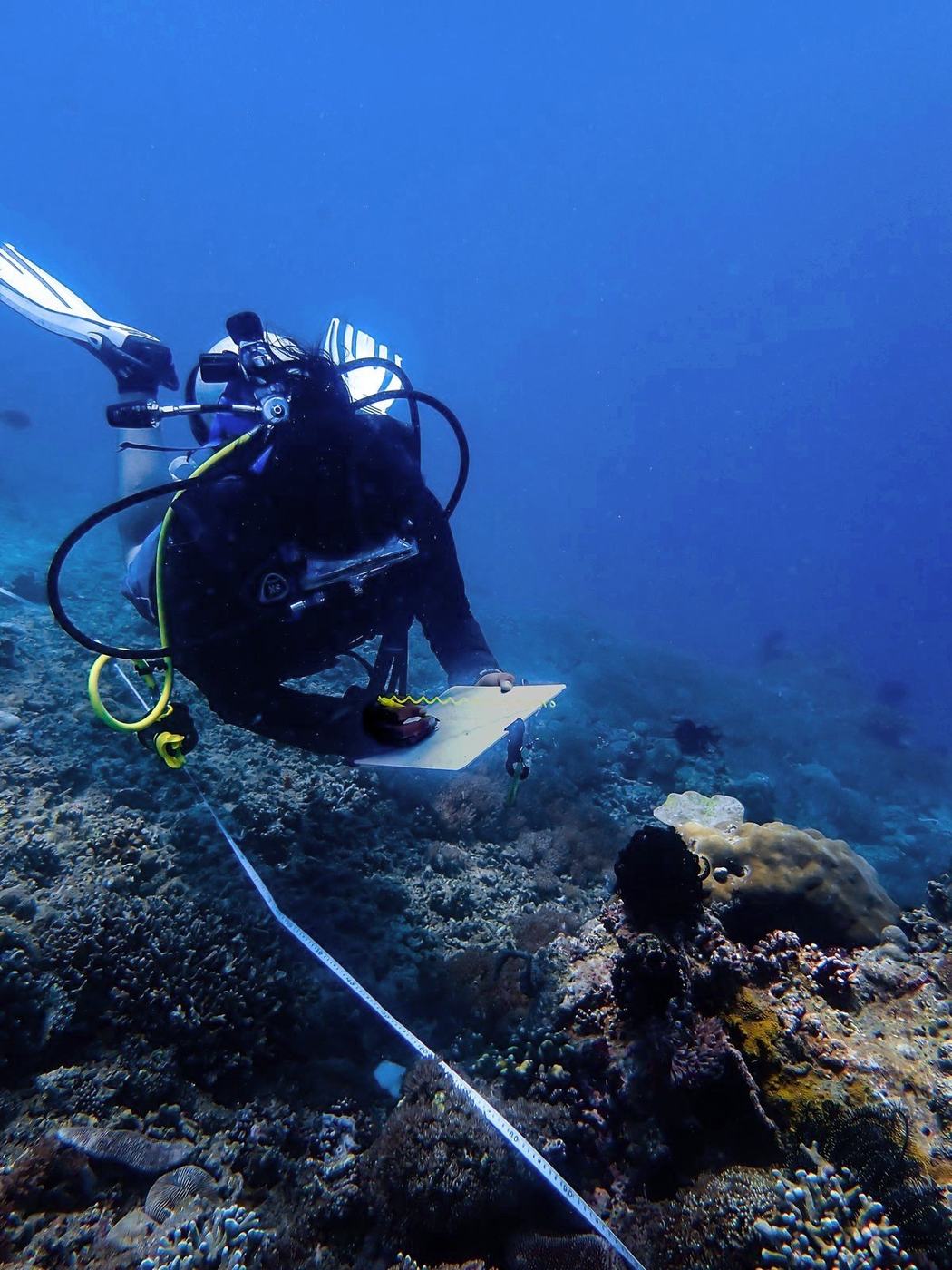
From coral reef monitoring to turtle identification, mangrove restoration and water quality analysis, you will take part in cutting-edge research and conservation while living in one of the most biodiverse regions of the Indo-Pacific.
From diver to researcher: dive skills, reef surveys, data analysis, conservation outcomes.
- Minimum age
- 18
- Duration
- 2 - 25 weeks
- Start dates
- Any Monday
- Entry level
- University students
- From
- £1,250
What you'll do
On the reef and off it
Everything on the Eco-Venture, plus a deeper level of science:
-
Work with scientists
Assist our scientists with the deeper side of the work, from coral fragmentation to long-term reef monitoring.
-
Learn the methods
Train in the software and lab methods behind our research: image analysis, water quality, drones and GIS.
-
Plan a restoration site
Assess a site underwater and write your own coral restoration proposal, then present it to the team.
-

Build your CV
A foundation of knowledge and experience that makes you more competitive for research, postgraduate study or a conservation career.
-
Corals in depth
Identify corals to genus, and measure how fast the fragments in our nurseries are growing.
-
Mangroves, seagrass and waste
Identify mangrove and seagrass species, survey seagrass health, and learn how waste is managed.
Work with scientists
You join the team's working week.
- Coral fragmentation during nursery and artificial reef work
- Deep cleans of our nurseries and artificial reefs: removing predators, competition and unhealthy fragments, then repopulating
- Long-term monitoring surveys of fish, coral cover and invertebrates across our local reefs
- Weekly data entry: priority species, turtle sightings, Dive Against Debris and water quality
- Survey briefings, dive planning and debriefs alongside our science team
Learn the methods
The tools that turn what you collect underwater into data.
- CPCe and ReefCloud: analysing quadrat photos for substrate and coral cover
- ImageJ: measuring coral fragments to track growth
- Water sample analysis: pH, dissolved oxygen, salinity, nutrients and more
- Aerial monitoring with a drone
- An introduction to GIS for mapping marine ecosystems
Plan a restoration site
A small project of your own, as big or as small as you like.
- A briefing on how coral restoration is planned, and why it matters
- Restoration site assessment dives
- Writing a mini coral restoration proposal
- Presenting it to the other guests and our staff
Build your CV
What you leave with, beyond the experience itself.
- Documented field survey experience
- Training in specific survey methods and software
- Regular one-to-one career mentoring with our managing director
- A reference from the scientists you worked alongside
- Logged dives in a research context
Corals in depth
- A coral genus identification lecture, then identification dives
- Coral growth rate dives: photographing nursery fragments for measurement
- Measuring the photos in ImageJ to calculate growth
Mangroves, seagrass and waste
- Mangrove species identification
- Seagrass species identification, practised along the shoreline
- Seagrass health surveys
- A waste management lecture: plastics, threats to the ocean, and recycling


Skills you'll gain
What you'll take away
Depending on the length of your stay, project needs and conditions on site, you will gain experience across several areas of our work.
Marine ecosystems and species
- Coral reef biology, ecology, threats and conservation
- Coral (to genus), fish, invertebrate and priority species identification
- Shark, ray and turtle ecology and conservation
- Mangrove and seagrass ecosystems, including species identification
Fieldwork and survey methods
- Coral restoration: fragmentation, nursery and artificial reef care, growth monitoring
- Coral restoration site assessment and planning
- Long-term reef monitoring surveys of fish, coral cover and invertebrates
- Baited Remote Underwater Video and Diver Operated Video
- Turtle identification with Internet of Turtles
- Seagrass health surveys and mangrove restoration
Advanced techniques
- Water sample analysis: pH, dissolved oxygen, salinity and nutrients
- Aerial monitoring with drones, and an introduction to GIS mapping
- Image data analysis with CPCe, ImageJ and ReefCloud
- Scientific data entry and management
Professional development
- Experience working at an international NGO field site
- Presenting a restoration proposal to scientists and peers
- Eco-aware diving and advanced buoyancy skills
- One-to-one career mentoring with our managing director
Fees
What it costs
£1,250
A 20% deposit holds your place, with the balance due ten weeks before you arrive. PADI courses and the Marine Park fee are charged separately.
Included
- All field training across our projects, techniques and methodologies
- Introductory and advanced marine biology and conservation lecture and workshop series
- Unlimited training and survey dives, typically two to three a day, Tuesday to Saturday, weather permitting
- Training in research tools and software for ecological monitoring and data analysis
- One-to-one career guidance with our managing director
- Scuba equipment rental: tanks, BCD, regulator and weights
- All necessary research and field equipment
- A private room in a traditional bamboo lodge, or a shared room on request
- Three meals a day, seven days a week
- Unlimited drinking water, tea and coffee
- Sunday Funday: an extra fun dive, team social and dinner
- Access to the outdoor gym, yoga space, and volleyball and basketball courts
- 24-hour in-country support
- A visa information pack, and contact details for a recommended visa agent
Not included
- Marine Park entrance fee, Rp. 200,000 - 800,000 depending on length of stay, payable on site
- Flights and transfers
- Visa costs
- Travel and diving insurance
- Personal dive gear: mask, fins and wetsuit or rashsuit
- Dive computer rental, available on site
- Internet: there is no Wi-Fi on site. Buy an Indonesian SIM card with mobile data, for your phone or a portable hotspot
- Additional food, drinks and excursions
Before you book
What we ask of you
Everything you'll need to join us 
Not quite there yet? Don't worry: if you are not yet a diver, you can complete your PADI Open Water course with us when you arrive.
Not sure you qualify? Ask us- Degree
- Enrolled in, or having completed, an undergraduate degree in a relevant field: biology, marine biology, oceanography, ecology, conservation, zoology or similar
- Age
- 18 or over
- Diving
- PADI Open Water certification or equivalent, or complete it with us on arrival Dive courses
- Medical
- Fit to dive, confirmed on our medical form
- Length
- A minimum of 2 weeks, up to 25 weeks - 4 weeks or more is recommended to build real depth across our projects
- Start
- Expeditions start and finish on Mondays
Is it right for me?
This expedition could be right for you if you want to
Build the practical skills, scientific knowledge and professional experience that research, postgraduate study and conservation roles look for.
Use what you are studying at university on real surveys, real data and active conservation projects.
Try coral, turtle, mangrove and seagrass work across multiple marine ecosystems before deciding where to specialise.
Go from diver to researcher, developing eco-aware diving and advanced buoyancy skills while collecting data underwater.
Spend your placement at an international field site in one of the most biodiverse regions of the Indo-Pacific.
01 of 05
Build the practical skills, scientific knowledge and professional experience that research, postgraduate study and conservation roles look for.
02 of 05
Use what you are studying at university on real surveys, real data and active conservation projects.
03 of 05
Try coral, turtle, mangrove and seagrass work across multiple marine ecosystems before deciding where to specialise.
04 of 05
Go from diver to researcher, developing eco-aware diving and advanced buoyancy skills while collecting data underwater.
05 of 05
Spend your placement at an international field site in one of the most biodiverse regions of the Indo-Pacific.

Ready to become a Conservation Research Assistant?
Spaces are limited, so book early.
Book online and tell us your dates, and we'll come back to you about availability. If you have questions first, just get in touch.