
Eco-Venture
Adventure, discovery and conservation in one expedition, open to anyone, with no experience needed.
Eco-Venture (EV)
A dive holiday with purpose
Our Eco-Venture is the perfect blend of adventure, discovery and conservation. Designed for travellers, divers and curious minds who want more than just a holiday, this expedition lets you combine scuba diving in paradise with the chance to make a real difference.
Join us on the tropical island of Lombok, Indonesia, and spend your days exploring vibrant coral reefs, planting and caring for corals, learning to identify the species around you, planting mangroves and learning directly from experienced marine biologists.
The Eco-Venture is your opportunity to gain hands-on skills, reconnect with nature, and contribute to the protection of some of the world's most biodiverse marine ecosystems.
Perfect for beginners: no experience needed.

- Minimum age
- 18
- Duration
- 2 - 25 weeks
- Start dates
- Any Monday
- Entry level
- Open to all
- From
- £1,150
What you'll do
On the reef and off it
Every Eco-Venture is rooted in our active research, conservation and education initiatives. With two to three dives a day, Tuesday to Saturday, the reef is both your classroom and your playground.
-
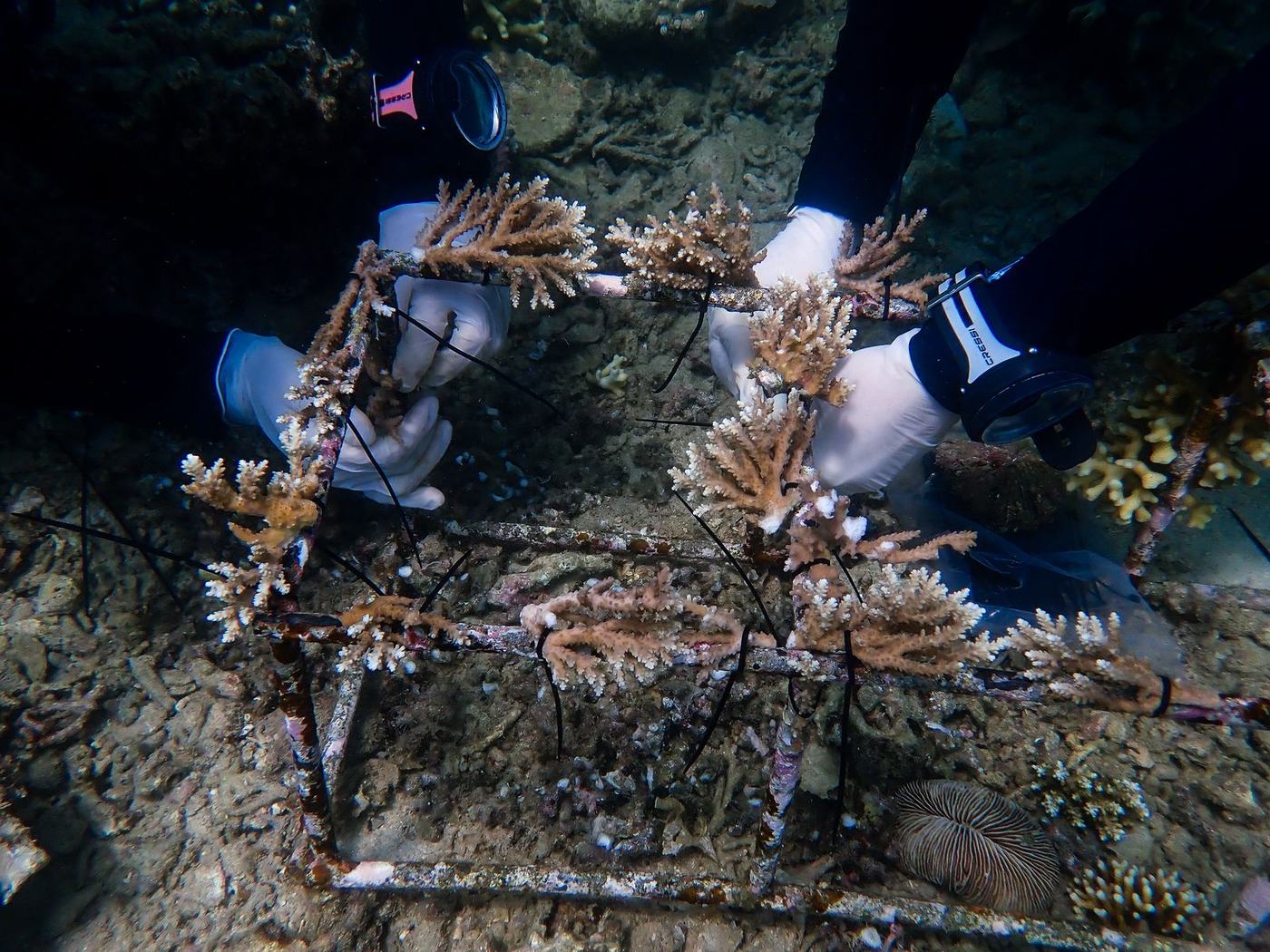
Coral restoration
Planting and tending to corals on our nurseries and artificial reefs, and helping build the structures they grow on.
-
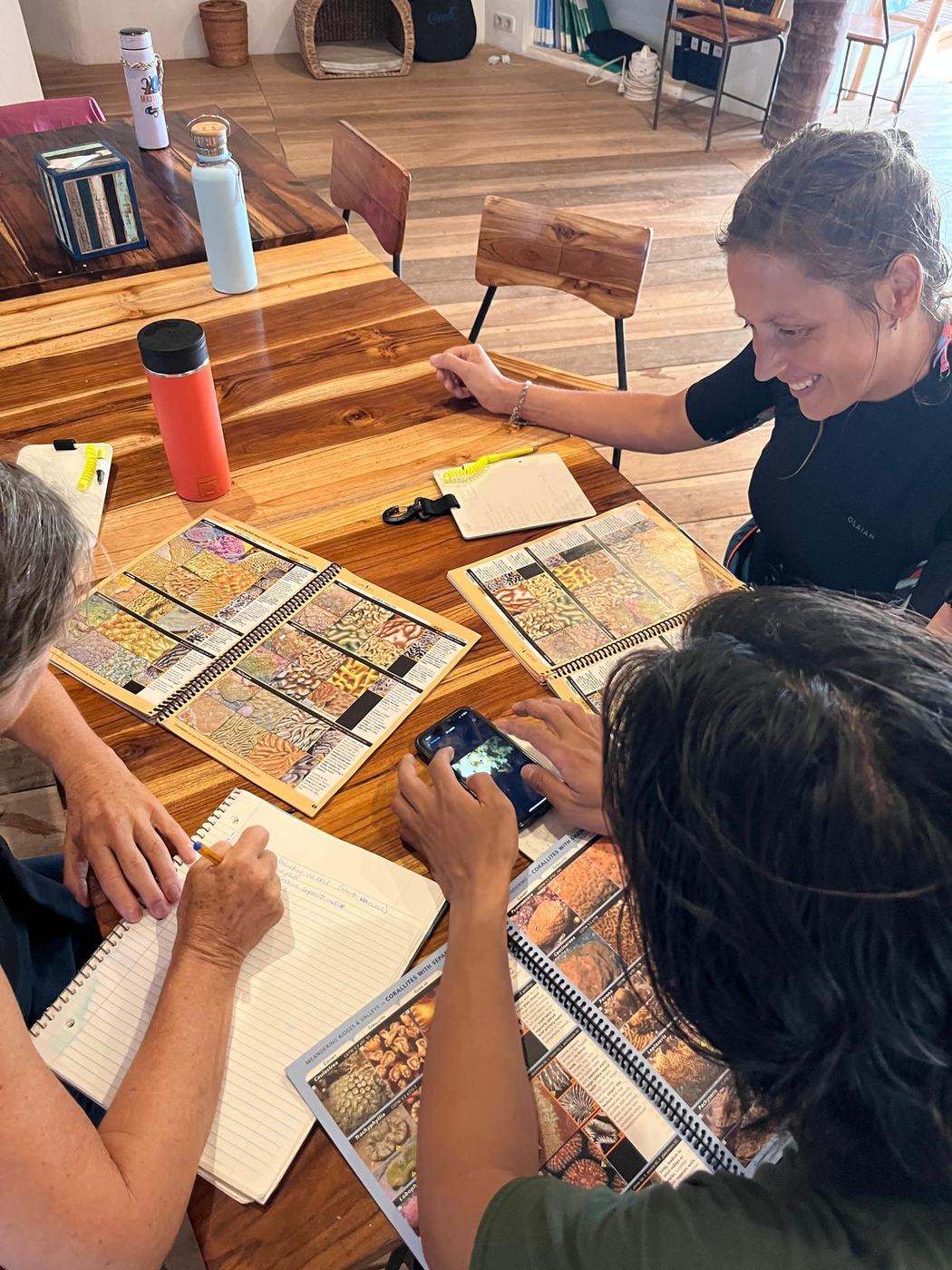
Species identification
Learning to recognise the corals, fish, invertebrates and priority species of our reefs, then putting it to the test underwater.
-
Mangroves and seagrass
Collecting and planting mangroves, and learning how these coastal habitats support the reef.
-

Debris and clean-ups
Removing debris from the reef, the beach and the mangroves, and recording what we find.
-
Lectures and briefings
A lecture series that explains the science behind everything you do in the water.
-
Survey diving
Learning real survey methods, then using them to collect data for our monitoring.
Coral restoration
Briefings explain how and why we restore, then you join the work on the reef.
- Weekly nursery maintenance dives, cleaning the structures so the corals grow healthily
- Maintenance dives on our artificial reefs, controlling coral predators and removing competition
- Frame plants: attaching coral fragments to metal frames with cable ties
- MARS plants: attaching fragments to concrete Modular Artificial Reef Structures with epoxy
- Helping build, sand and install new frames, MARS blocks and coral nurseries
- Clearing macroalgae from our restoration sites
New structures are built and installed when the project needs them, so these days depend on when you visit.
Species identification
Each lecture on land is followed by an identification dive to practise what you learned.
- Coral lifeforms: the shapes and growth forms corals take
- Substrate: everything on the seabed, from rock to living organisms
- Fish: the families we survey, then many more found around SORCE
- Priority species: the individual species we monitor
- Invertebrates: the weird and wonderful animals without a backbone
- Identifying the turtles we meet with Internet of Turtles, a global database
- Learning how manta rays are identified with i3S Spot software
Mangroves and seagrass
The habitats either side of the reef, and the ones most often overlooked.
- An introductory walk through the mangroves around SORCE
- Collecting mangrove seeds and propagules on the way to our nursery
- Planting propagules in the mangrove nursery
- Transplanting nursery-grown mangroves at our restoration sites
- Lectures on mangrove and seagrass ecology
Transplanting takes place in the wet season, so what you join depends on when you visit.
Debris and clean-ups
Debris removal is part of everyday life at SORCE, not an occasional event.
- Debris dives on our local reefs
- Beach and mangrove clean-ups
- Sorting and cleaning what is collected, ready for our recycling partners
- Logging it in the PADI AWARE and SORCE databases
Now and then, guests join a beach clean or a mangrove planting with a local school, alongside the pupils' teachers.
Lectures and briefings
Short, practical sessions in our classroom and The Den.
- Principles of marine ecology
- Coral physiology: how corals live, feed, grow and reproduce
- Marine threats and Marine Protected Areas
- Shark and ray ecology
- Turtle ecology
- Mangrove and seagrass ecology
- Briefings on coral nurseries, artificial reefs and survey techniques
Survey diving
Diving with a purpose and a piece of equipment, rather than simply going for a look.
- A survey techniques briefing, practised on land before you try it underwater
- Methods including quadrats, belt transects, line and point intercept, and underwater visual census
- Quadrat surveys, whose photos contribute to the ReefCloud global database
- Deploying Baited Remote Underwater Video (BRUV) to record priority species with no divers nearby
- Reviewing BRUV footage for priority species
- Assisting a scientist on Diver Operated Video (DOV) surveys
Training comes first. Nobody is handed a slate and expected to know what to write on it.
Skills you'll gain
What you'll take away
What you build depends on the length of your stay, your interests and conditions on site, but most participants gain experience across:
Marine ecosystems and species
- Marine ecology, coral biology, threats and Marine Protected Areas
- Coral lifeform, substrate, fish, invertebrate and priority species identification
- Shark, ray and turtle ecology and conservation
- Mangrove and seagrass ecosystems: how they work, threats and restoration
Hands-on restoration
- Coral nursery and artificial reef maintenance
- Planting corals on frames and MARS structures
- Building and installing nursery and artificial reef structures
- Mangrove propagule collection, nursery planting and transplantation
- Marine debris removal, sorting and recording
Survey diving and monitoring
- Survey techniques including quadrats, belt transects and underwater visual census
- Quadrat surveys for ReefCloud
- Baited Remote Underwater Video and Diver Operated Video surveys
- Turtle photo-identification with Internet of Turtles
Personal development
- Eco-aware diving and buoyancy control skills
- Experience working with marine scientists in a professional setting
- Teamwork and life at an international field centre
- Cultural exchange with our Indonesian team
Fees
What it costs
£1,150
A 20% deposit holds your place, with the balance due ten weeks before you arrive. PADI courses and the Marine Park fee are charged separately.
Included
- All field training across our projects, techniques and methodologies
- Introductory marine biology and conservation lecture and workshop series
- Unlimited training and survey dives, typically two to three a day, Tuesday to Saturday, weather permitting
- Scuba equipment rental: tanks, BCD, regulator and weights
- All necessary research and field equipment
- A private room in a traditional bamboo lodge, or a shared room on request
- Three meals a day, seven days a week
- Unlimited drinking water, tea and coffee
- Sunday Funday: an extra fun dive, team social and dinner
- Access to the outdoor gym, yoga space, and volleyball and basketball courts
- 24-hour in-country support
- A visa information pack, and contact details for a recommended visa agent
Not included
- Marine Park entrance fee, Rp. 200,000 - 800,000 depending on length of stay, payable on site
- Flights and transfers
- Visa costs
- Travel and diving insurance
- Personal dive gear: mask, fins and wetsuit or rashsuit
- Dive computer rental, available on site
- Internet: there is no Wi-Fi on site. Buy an Indonesian SIM card with mobile data, for your phone or a portable hotspot
- Additional food, drinks and excursions
Before you book
What we ask of you
Everything you'll need to join us 
Not quite there yet? Don't worry, there is often a way round. If you are not yet a diver, you can complete your PADI Open Water course with us before your expedition begins. Have an interested teenager aged 16 or 17? Ask us about joining together.
Not sure you qualify? Ask us- Age
- 18 or over
- Diving
- PADI Open Water Diver or equivalent, or book your Open Water course with us before joining Dive courses
- Medical
- Fit to dive, confirmed on our medical form
- Length
- A minimum of 2 weeks, up to 25 weeks
- Start
- Expeditions start and finish on Mondays
Is it right for me?
This expedition could be right for you if you want to
Combine scuba diving in paradise with the chance to make a real difference to some of the most biodiverse marine ecosystems in the world.
No experience is needed. Every method is taught before you use it, so nobody is handed a slate and expected to know what to write on it.
Plant corals, plant mangroves and learn to identify reef species, directly from experienced marine biologists.
Spend your days on vibrant coral reefs and in the mangroves and seagrass that hold this coastline together.
Live and work alongside our Indonesian team, and share in the cultural exchange at the heart of SORCE.
01 of 05
Combine scuba diving in paradise with the chance to make a real difference to some of the most biodiverse marine ecosystems in the world.
02 of 05
No experience is needed. Every method is taught before you use it, so nobody is handed a slate and expected to know what to write on it.
03 of 05
Plant corals, plant mangroves and learn to identify reef species, directly from experienced marine biologists.
04 of 05
Spend your days on vibrant coral reefs and in the mangroves and seagrass that hold this coastline together.
05 of 05
Live and work alongside our Indonesian team, and share in the cultural exchange at the heart of SORCE.

Ready to become an Eco-Venturer?
Spaces are limited, so book early.
Book online and tell us your dates, and we'll come back to you about availability. If you have questions first, just get in touch.