
Scientific Field Placement
Our most advanced and selective expedition, for those who want to lead in the global marine conservation sector.
Scientific Field Placement (SFP)
Intensive training for future conservation leaders
The Scientific Field Placement is SORCE's most advanced and selective expedition. Designed for graduates and early-career professionals with a strong academic background in marine science, it offers an unparalleled opportunity to develop as a field scientist, project leader and conservation practitioner.
Unlike our other expeditions, SFP students step into leadership roles: guiding projects, mentoring peers, and designing their own research initiatives.
By the end of your placement you will leave as a well-rounded marine scientist with both technical expertise and leadership skills.
There are just two SFP places at any one time, so each one gets close support from our team.
- Minimum age
- 18
- Duration
- 12 - 25 weeks
- Start dates
- Any Monday
- Entry level
- Graduates and early career
- From
- £4,500
What you'll do
On the reef and off it
Everything on the CRA, plus the responsibility to lead it. As an SFP participant, you will:
-

Manage projects
Take responsibility for managing and developing active research and conservation projects.
-

Lead and mentor
Lead and mentor EV, CRA and RTP participants, from the scientific briefing to the science underwater.
-
Use advanced methods
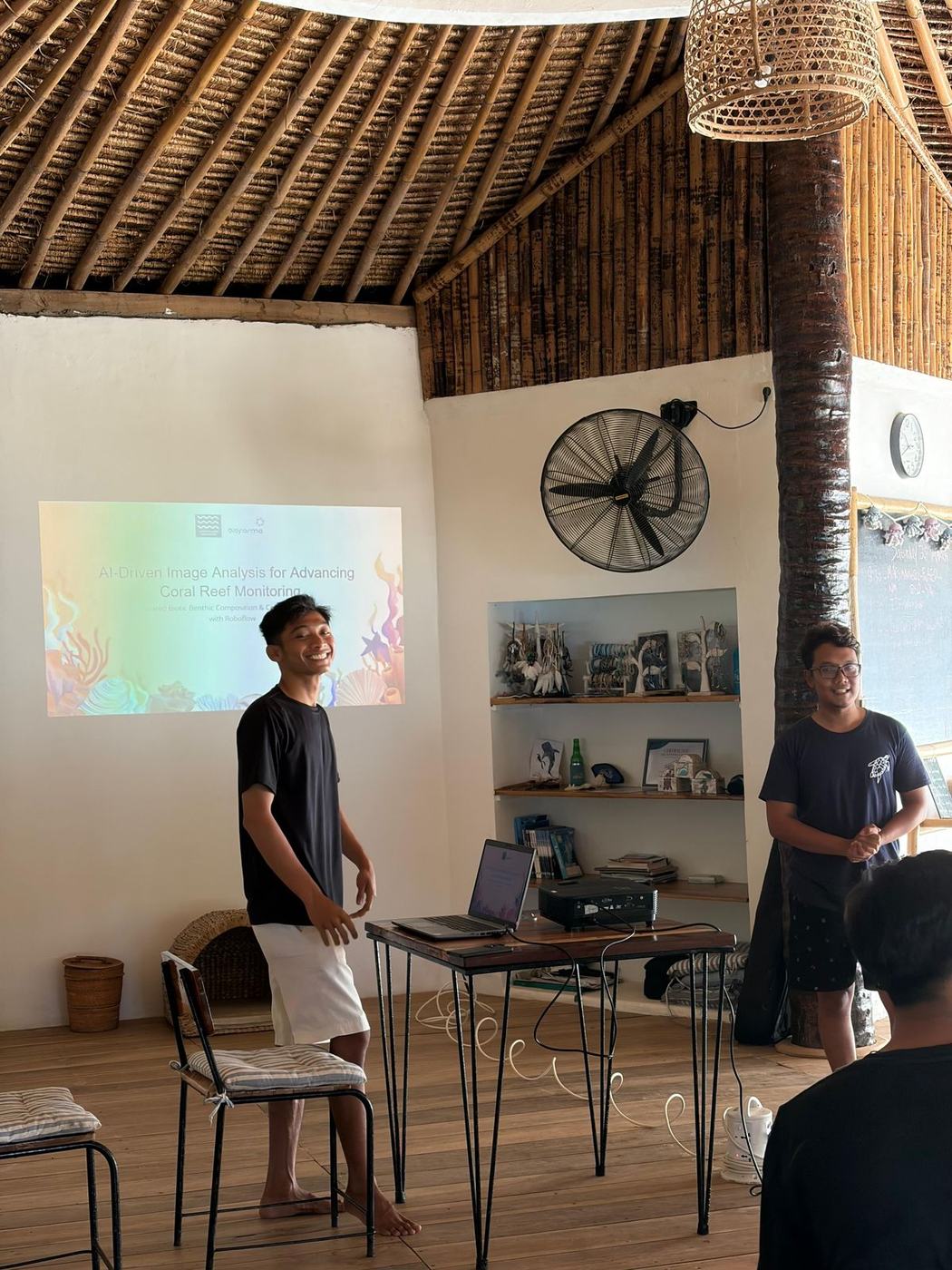
Hands-on with BRUV and DOV surveys, drone monitoring, GIS and image analysis software.
-
Analyse and report
Turn survey data into results: analysis, figures and written reports for our team.
-
Run your own study
Stay 16 weeks or more and you can design and run a research project of your own.
-

Communicate it
Brief, teach and explain conservation work to participants, visitors and partners.
Manage projects
Responsibility for a piece of the programme, not just participation in it.
- Planning and scheduling field activity
- Coordinating people, boats and equipment
- Keeping a survey programme on track
- Managing data collection standards
- NGO management training: how a conservation organisation is run
- Student and volunteer coordination training
Lead and mentor
Bringing other people up to the standard the work needs.
- Scientific dive briefing training: briefing conservation and survey activities
- Leading conservation activities, supervised by a scientist or divemaster
- Training newer participants in survey methods
- Checking identification and data quality
- Giving feedback that people can act on
Use advanced methods
The techniques that go beyond standard reef monitoring.
- BRUV deployment and structured footage review
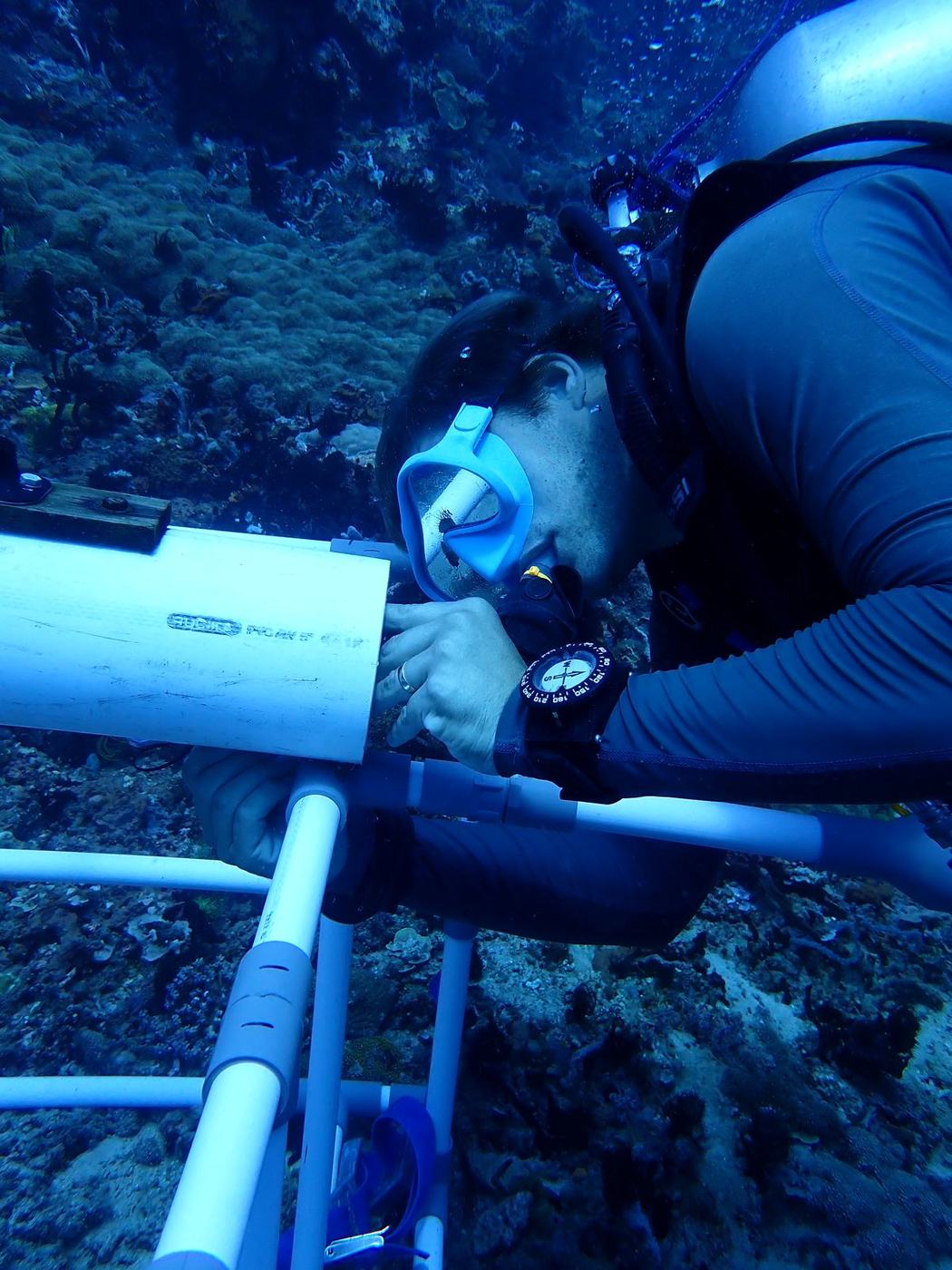
- Diver Operated Video surveys
- Aerial monitoring with drones
- GIS mapping and spatial analysis
- Image analysis with CPCe, ImageJ and ReefCloud
- Water sample analysis
Analyse and report
What happens after the data comes out of the water.
- Data entry, processing and quality-checking
- Analysis suited to the question being asked
- Producing figures and tables that stand on their own
- Writing survey summaries and technical reports for our team
- Supporting our reporting to partners and stakeholders
Run your own study
An independent piece of work, carried from question to conclusion.
- Identifying a question worth answering
- Designing a study that is feasible here
- Collecting and managing your own data
- Analysing and interpreting results
- Writing it up as a scientific report
A project raises the minimum stay from 12 to 16 weeks. If you hope to publish, contact us early about the correct visa and permits: planning up to a year ahead is recommended, and data collected with SORCE remains SORCE's academic property.
Communicate it
Work that nobody hears about does not change anything.
- Briefing participants on conservation and survey activities
- Presenting to the science team and visitors
- Writing for non-specialist audiences
- Explaining our work to partners and stakeholders

Skills you'll gain
What you'll take away
Your exact training depends on the length of your stay, your chosen focus areas and conditions on site, but SFP students typically develop:
Leadership and project management
- Planning and scheduling field activity
- Coordinating people, boats and equipment
- Training and mentoring newer participants in survey methods
- Briefing and leading conservation activities, and leading the science underwater
- NGO management, and student and volunteer coordination
Advanced field methods
- Baited Remote Underwater Video and Diver Operated Video
- Aerial monitoring with drones, and GIS mapping
- Water sample analysis
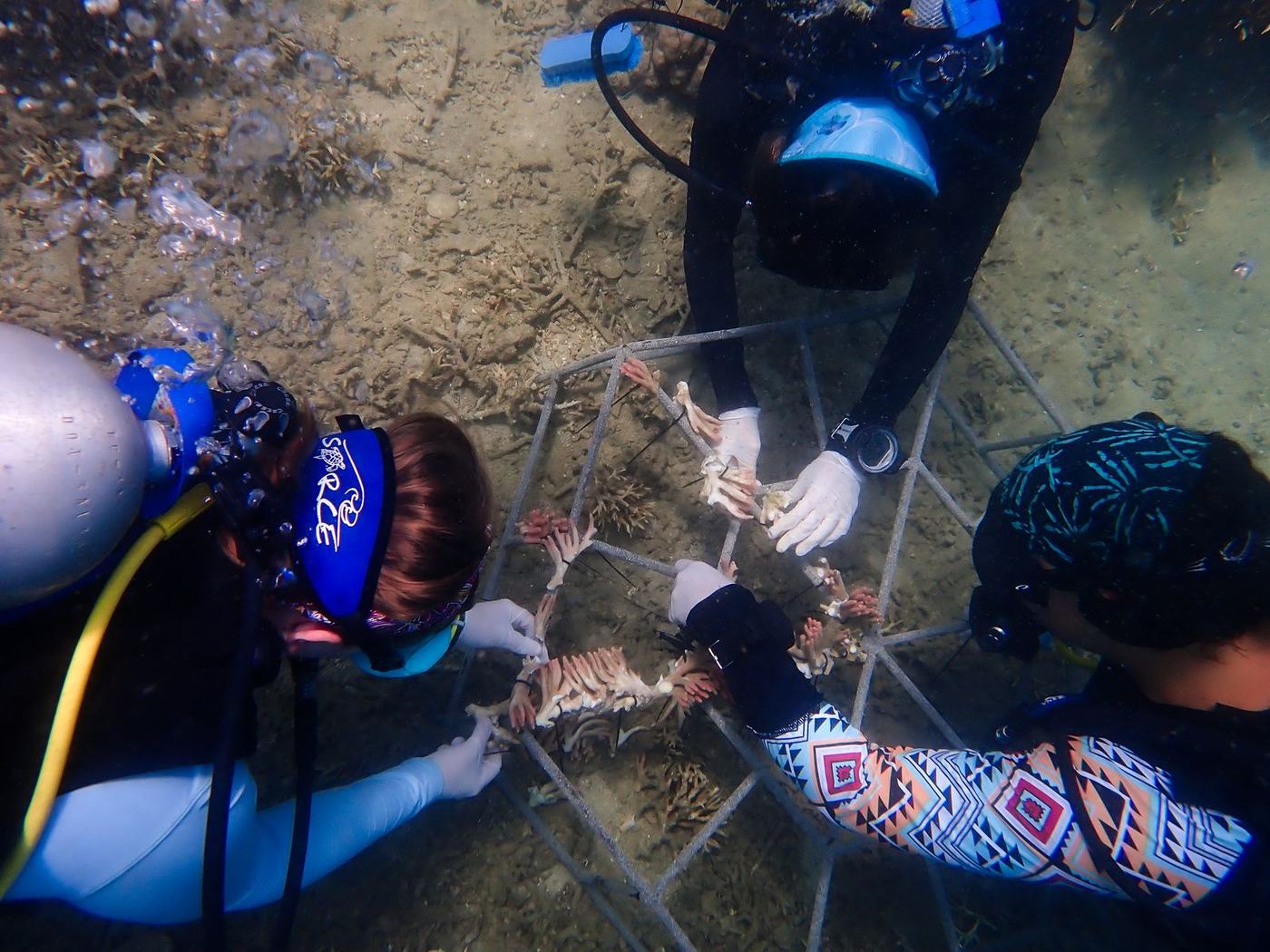
- Advanced survey and restoration practice across coral, mangrove and seagrass
Data, analysis and reporting
- Processing and quality-checking datasets
- Data analysis with CPCe, ImageJ, ReefCloud and GIS
- Survey summaries and technical reporting
Research and communication
- Designing and running your own study, with a stay of 16 weeks or more
- Presenting to the science team and visitors
- Six one-to-one career guidance sessions with our managing director
- Scientific diving, and leading the science on a dive
Fees
What it costs
£4,500
A 20% deposit holds your place, with the balance due ten weeks before you arrive. PADI courses and the Marine Park fee are charged separately.
Included
- All field training across our projects, techniques and methodologies
- Leadership training, including planning, running and reporting on field projects
- Introductory and advanced marine biology and conservation lecture and workshop series
- Training in advanced field methods: BRUVs, DOVs, drone monitoring and GIS mapping
- Data analysis training with CPCe, ImageJ, ReefCloud and GIS
- Your own study, planned with our science team, if you stay 16 weeks or more
- Six one-to-one career guidance sessions with our managing director
- Unlimited training and survey dives, typically two to three a day, Tuesday to Saturday, weather permitting
- Scuba equipment rental: tanks, BCD, regulator and weights
- All necessary research and field equipment
- A private room in a traditional bamboo lodge, or a shared room on request
- Three meals a day, seven days a week
- Unlimited drinking water, tea and coffee
- Sunday Funday: an extra fun dive, team social and dinner
- Access to the outdoor gym, yoga space, and volleyball and basketball courts
- 24-hour in-country support
- A visa information pack, and contact details for a recommended visa agent
Not included
- Marine Park entrance fee, Rp. 500,000 - 800,000 depending on length of stay, payable on site
- Flights and transfers
- Visa costs
- Travel and diving insurance
- Personal dive gear: mask, fins and wetsuit or rashsuit
- Dive computer rental, available on site
- Internet: there is no Wi-Fi on site. Buy an Indonesian SIM card with mobile data, for your phone or a portable hotspot
- Additional food, drinks and excursions
Before you book
What we ask of you
Everything you'll need to join us 
Not quite there yet? Don't worry: if you are not yet at Advanced Open Water, you can complete it with us before your placement starts.
Not sure you qualify? Ask us- Degree
- An undergraduate degree or higher in a relevant subject: marine biology, oceanography, conservation, ecology, zoology or similar
- Age
- 18 or over
- Diving
- PADI Advanced Open Water or equivalent, or complete it with SORCE before starting Dive courses
- Medical
- Fit to dive, confirmed on our medical form
- Length
- A minimum of 12 weeks, up to 25 weeks
- Start
- Expeditions start and finish on Mondays
- CV
- A copy of your CV, sent with your booking
How to apply
- Complete the booking formChoose Scientific Field Placement and tell us about yourself and your dates.
- Email us your CVSend it to enquiries@sorce.org so we can match you to a project.
- Talk it throughWe arrange a call to discuss what you would like to focus on, usually once your booking is confirmed.
Is it right for me?
This expedition could be right for you if you want to
Take responsibility for active research projects and the people working on them, from the scientific briefing to the science underwater.
Develop technical expertise and leadership skills together, as a field scientist, project leader and conservation practitioner.
Use BRUVs, Diver Operated Video, drones, GIS and image analysis software on real research.
Stay 16 weeks or more to design and run your own study, and write it up as a scientific report.
Gain experience of reporting, NGO management and volunteer coordination, with six one-to-one career sessions along the way.
01 of 05
Take responsibility for active research projects and the people working on them, from the scientific briefing to the science underwater.
02 of 05
Develop technical expertise and leadership skills together, as a field scientist, project leader and conservation practitioner.
03 of 05
Use BRUVs, Diver Operated Video, drones, GIS and image analysis software on real research.
04 of 05
Stay 16 weeks or more to design and run your own study, and write it up as a scientific report.
05 of 05
Gain experience of reporting, NGO management and volunteer coordination, with six one-to-one career sessions along the way.

Ready to start your Scientific Field Placement?
Spaces are limited, so book early.
Book online and tell us your dates, and we'll come back to you about availability. If you have questions first, just get in touch.